

[Editor's Note: Mr. Vereen has provided a number of photos and documents to supplement his oral history. You can find them throughout his interview series transcripts as well as in this gallery on the Rutgers Oral History Archives website.]
Shaun Illingworth: This begins an oral history interview with Fred Vereen, Jr., on April 2, 2024, in Lawrence Township, New Jersey. Thank you very much for having me today and thank you also for taking me around your neighborhood and showing me many of the things that we will talk about in this interview, as well as explaining how you, your friends and others have helped preserve and expand this neighborhood. First, I would like you to tell me, please, where and when were you born?
Fred Vereen: I was born in Trenton, Trenton, New Jersey, at 14-1/2 Tyrell Avenue. It's called North Trenton now, but, when we were coming up, it was called East Trenton. There was East, South, West and North Trenton in the city at that time. I was born in 1933.
[Editor's Note: North Trenton, South Trenton, East Trenton and the West End are neighborhoods of the City of Trenton in Mercer County. West Trenton is a community within Ewing Township, which borders Trenton.]
We lived at 14-1/2 Tyrell Avenue. When my mother and father first came up, they lived with my Uncle Frank, who was the first to migrate from the South. At that time, my brother Jim (James Clarence), who is the oldest, my brother Edward, next oldest, and my sister Mayetta, and I was the fourth child, Mom and Dad had, Fred Douglas and Ellen Rice Vereen.
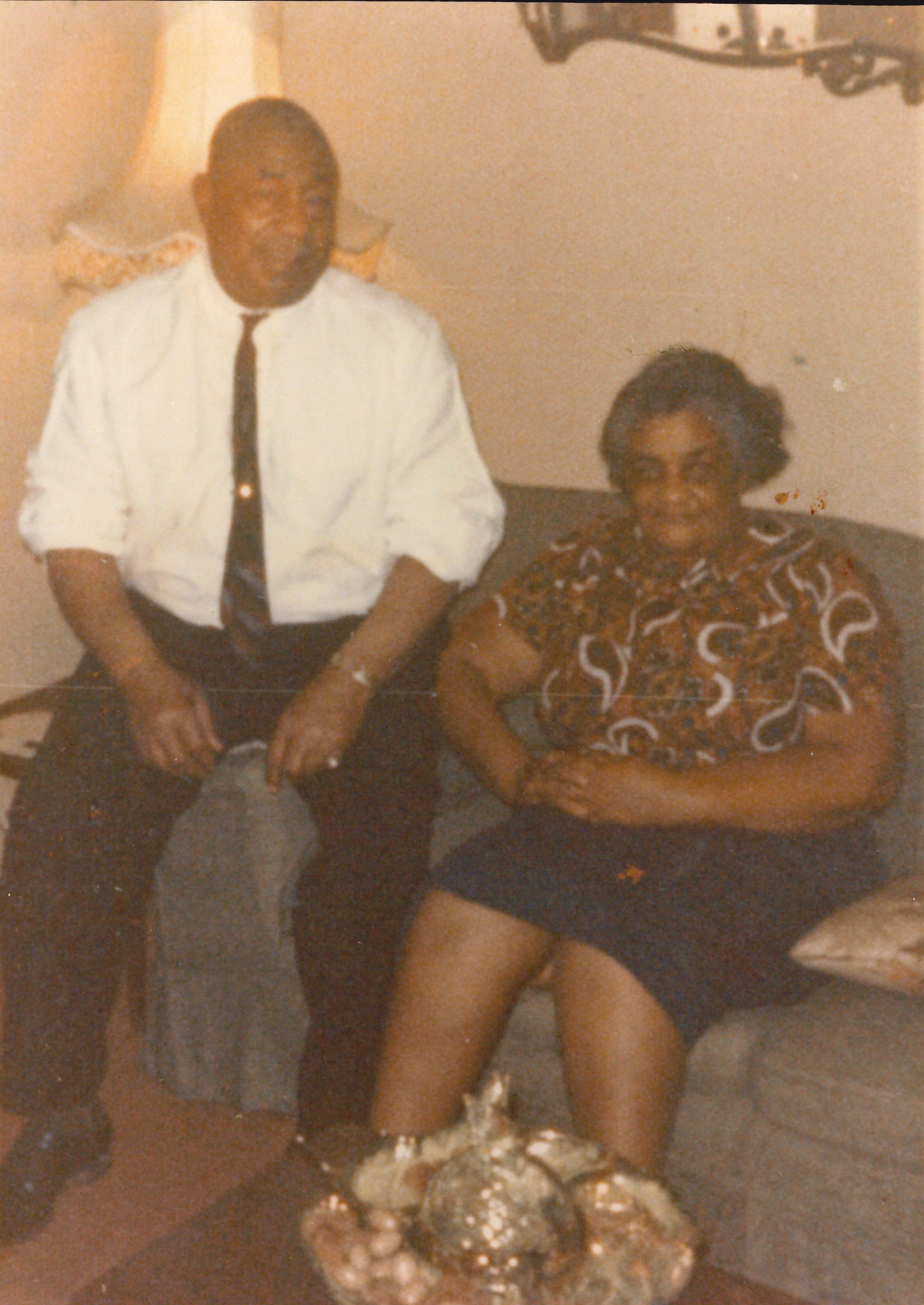 There was six years' difference between me and the youngest of the three older children. I always used to ask Mom, I said, "Why the big difference?" She said, "Well, your father and I, after we had the three, we said we weren't going to have any more." Then, six years later, I come, and then, four more after me. I said, "My goodness," I said, "good thing you didn't do family planning--there's no telling how many we would have had."
Then, we stayed there until I was about three. Then, another uncle came from the South, another brother, a younger brother, came with his wife and a child and moved into the same house. So, we moved out. We moved into Lawrence Township, but we moved into a community called Eldridge Park, which is just adjacent to Eggerts Crossing.
[Editor's Note: Eldridge Park and Eggerts Crossing are both communities (or neighborhoods) within Lawrence Township. In 1974, a group of local citizens, led by Mr. Vereen, organized to build a hundred-unit affordable townhome development in Eggerts Crossing.]
We moved into a house that was really terrible. It was a two-story house, had no running water, had an outside toilet, also. At one time, it must have been a pretty good house, but, when we moved into it, it was terrible. It had two cellars and the cellars always, always had water in them. We never saw the floor of those cellars while we were there.
Figure 1: Fred Vereen, Jr., with his mother, Ellen.
My older brothers, they had to carry [water in], bring water from the neighbor's house. That's how we had the drinking water and cooking water. The roof leaked. There was a wood stove in the kitchen and there was another stove up on the second floor. It was really a terrible house.
We stayed there until I was in first grade. I started kindergarten in Eldridge Park. I went into kindergarten, then, first grade. Then, we moved into East Trenton again, but we moved on a different street. It was Oak Street. That was a rowhouse, but it was like moving into heaven, because we had an inside toilet. We had a heater in the basement that heated the house. We had the [proper] number of bedrooms.
The only problem we did have was, we had roaches. We had roaches galore, and you couldn't get rid of them then. I mean, it was a rental house and there was no such thing as exterminators coming. Mom did her best. I can remember sweeping up dead roaches all the time, where Mom would try (and she did her best) to get rid of the roaches. When you had neighbors on both sides of you, living on both sides, and they didn't do anything, so, all you were doing is killing roaches coming from both sides, but the living condition was much better.
We stayed there until I was in third grade. We only stayed there about two years. That's when we moved into Eggerts Crossing. Again, I went to Eldridge Park School. We moved on Landover Road.
[TAPE PAUSED]
SI: We are back on.
FV: Okay, we moved into a little shack. It was a downgrade from where we lived in Trenton--outside toilet, a well not far from the toilet. Again, it was only two bedrooms for six people--no, for ten, including mom and dad. Fortunately, my two older brothers went into the service.
 First, my oldest brother went to college, West Virginia State, and that sort of relieved us a little bit. I mean, naturally, it didn't bother us as kids. We adapted to the condition, but it was a very small space.
We had a heater in the living room and a stove in the kitchen. When the fires went out, you didn't have any heat until you got up the next morning and made a fire in those stoves. You're talking about cold, with no such thing as storm windows. You were just fortunate enough to have plain windows.
My job was to chop wood, to have enough wood so [that] Mom could cook and enough wood to keep the fire going in the heater until you went to bed. That was my task and it wasn't an easy one. Then, Dad got pigs, chickens, that I had to raise.
Figure 2 "This little dwelling is what we lived in until we completed the house on the left."
One thing he did, he made me a responsible person. I raised eight piglets from baby pigs to 250-pound pigs. What he would do, my father would bring the food for the pigs and put it on the porch. It was my job, from then on, to take the food, feed the pigs, and the same way with chickens. He bought three hundred baby chicks.
He showed me what to do, how to do it. He worked with me for about two weeks with those chicks. After that, it was my responsibility [to] clean the chicken house. Then, when they got old enough, they laid eggs. He built a chicken house right in back of our little house. It was my job (and I always remember), I had to collect the eggs. I never forget, the largest amount of eggs I collected was two dozen eggs in one day.
SI: Wow.
FV: That's how many chickens we had--but my father, I appreciate what he did then, because he made me not fearful to take on challenges. One day, then, later, we got a cow. He told me, he said, "Mr. McGee," who lived over in Elderidge Park, the community adjacent to us, little less than a mile, he said, "Mr. McGee has a cow he wants to give us." He said, "I want you to go over and get that cow."
Now, I did see cows before, but was never around them. I didn't say, "Dad, I'm afraid. What do I do?" I knew where Mr. McGee lived--I went over and got that cow. During that time, between here and Eldridge Park, there was a farm. Mr. (Koloski?) had cows. I guess he had about twenty, twenty-five cows and they're out in the pasture. I had to bring that cow past those cows. When she saw them, she wanted to go over there, where they were. I couldn't hold her and she drug me.
Finally, I got to a place where I could tie her around the tree, and so, I tied her. Then, I ran home here and got Dad. He came with me and got the cow. I could see now, seeing some of my grandkids or kids, they wouldn't even go get a dog, much less telling them, "Go get a cow."
SI: Yes.
FV: But, I appreciate all that he did for me by making me a more responsible person.
SI: Again, you were, say, eight, nine, ten, around this time.
FV: I was about ten years old then.
SI: Okay. Before we go further into this area, can you tell me a little bit more about your family background? I know they came from North Carolina. Do you know anything about their lives before they came to New Jersey?
FV: Yes, well, my mother and father came from South Carolina, and Dad [came with] his father, Peter, and his mother. The oldest son, James, at one time, he was the head man in a logging company. He also was in charge of the commissary in that logging company. Dad drove an engine, a locomotive, out of the woods, bringing the logs up to the mill. When he moved up here in Trenton, he just assumed that he could get a job there also, but they had to work on a farm picking vegetables.
What I know about my grandmother and grandfather, they also came up and lived on Tyrell Avenue, 14-1/2 Tyrell Avenue, because I can remember my grandfather and grandmother took care of us, took care of me when I was [a child], while Mom and Dad went out to work.
I don't know too much. I do have--my nephew and my sister, one of my sisters (and I was looking for the material, I've got it here somewhere), he did some research on the family that he has. Maybe, the next time we get together, I can have it.
SI: Sure, yes.
FV: But, the only thing I do know [is] that Mom and Dad got married. Dad was twenty-two and I think Mom was nineteen when they got married in Hopkins, South Carolina. That's where Mom was from. We have since gone back a number of times to Hopkins, South Carolina.
As a matter of fact, when I got out of high school and I had my first car, a '41 Chevy (this was in 1953, '54) I took--I don't know how or why it came about--but I drove Mom and my four siblings under me in a '41 Chevy and we drove down to South Carolina. That was [something], never forget that trip, because I'm the only driver. You had no air-conditioning or nothing in your car at the time. You couldn't stop every place.
The only place that you could stop, we knew that company-owned gas stations, like Esso, you knew you can stop there, but [avoid] any other place at the time. I wasn't familiar with the thing they called The Green Book. I wasn't familiar with that at the time.
[Editor's Note: The Negro Motorist Green Book, a 1936 guidebook by Victor Hugo Green, provided African American travelers with safe locations to stop or stay at in the segregated Jim Crow South.]
Mom packed lunch and stuff for us. We'd pull alongside the road and [we] ate. I made it to an Esso station and a company-owned station and that's the only [option]. You didn't stop at the small gas stations or stores along the way, because you didn't know how the people are going to treat you.
The other problem I had, during the day, it was hot. In the sun, I'd get sleepy and I'd pull over along the road. It seemed like I closed my eyes maybe five or ten minutes. Then, I'd get up and go again. It took about, I don't know, eighteen hours for me to finally make it to my grandmother's (my mother's) place in Hopkins, in Columbia, South Carolina.
Her two brothers, Edward Rice and Zack Rice, they lived in Hopkins, South Carolina, which was about, oh, about four or five miles outside of Columbia, South Carolina. My Uncle Edward--he had, I think, six children and they're all around our age (his wife's name was Leslie)--and my Uncle Zack had one child and his wife's name was Darkest. They did individual farming of cotton and tobacco. They lived right across the highway from one another. We spent some time out staying with them.
Then, my father's brother, Uncle Jim, he lived in Mullins, North Carolina. After we left--we stayed about a week in Hopkins--then, I drove over to Mullins and spent some time with them, a few days with my uncle and his family.
[Editor's Note: Mullins is a city in Marion County in northern South Carolina.]
I had gone South with my grandmother (Chrissie Vereen) when I was seven years old. I spent the summer with my uncle, Uncle Jim, on his farm. He did truck farming. There was a white farmer who owned the land and my uncle grew the crops. He hired the people to work the fields and picked the beans or cotton or whatever it was. I used to go with him. His wife would fix the lunches and stuff and he would take it out to the fields for the workers' lunch.
[TAPE PAUSED]
SI: There we go.
FV: Yes, well, I stayed with Uncle Jim and his wife, Zella, and my Grandmother Chrissie. I slept with my grandmother. At the time, every night, I'd get down like I was saying my prayers. I didn't know my prayers, but I'd go through the act.
So, one night, she asked me, she said, "Boy, let me hear you say your prayers," and I couldn't say them. [laughter] So, from then on, she and I said the prayers together. That's how I learned to say my prayers. She probably knew I wasn't saying anything, but that was a good summer.
That was my first train ride. She was staying up here with my father and, I don't know, they must have talked about me going South. So, we caught the train in Trenton. Then, I do remember, we had to change trains in Washington.
That was a good experience that summer. My uncles, one of his sons had lived not far from my uncle. He had a son around my age and we used to play. My uncle grew tobacco. I used to go out in the field with them, when they had to crop big [leaves], what they call "cropping the leaves." They'd pull the leaves off the stem that they thought was ripe.
They would bring the leaves to--they called a house a smokehouse--where they (the women) would tie the leaves on a rack about three feet in length. Then, the men would take them and stack them up into this house, which was this smokehouse (which was a shell of a two-story house). It would go up to the ceiling.
They would put all these racks with the leaves attached in the smoke, and then, they'd have a fire on the outside of this house. All night long, someone would feed that fire to dry the leaves out. They'd take them to wherever they had to take them to sell them. So, that was a good experience that I remember.
SI: Yes. Do you know why the family started coming up to New Jersey?
FV: Yes, there wasn't any work. Just like most of the folks that migrated from the South, there wasn't any work for them there. The only thing that was there for them was farm work. So, they came North to (thought they could) make a better living. My father, when they came North and they came to Trenton, Trenton was a very industrial city. I mean, they had pottery factories, oh, shoot, the wire--Roebling.
SI: Roebling, yes.
[Editor's Note: John A. Roebling's Sons Company was a steel wire manufacturing company established in 1849 by John A. Roebling. Roebling was famous for building suspension bridges, including the Brooklyn Bridge. The company had a manufacturing complex in Trenton, New Jersey, where some of the buildings still stand today.]
FV: Roebling Wire, yes. There was all kinds of things, factories and hotels and things, that they could get a job--but Black folks weren't being hired in those things. My father and mother had to go out and work on the farms in Hightstown and West Windsor, picking potatoes and beans and tomatoes and whatnot. They didn't have the opportunity that I have.
I have books of the Roebling Company. A friend of mine wrote a book on the Roebling [plant] and lots of pictures in there--not one Black face in all of the pictures of working workers and groups of workers. In the city, Trenton had linoleum factories, they had car factories that built radiators.
[Editor's Note: The National Radiator Company was a radiator and boiler manufacturer established in 1902 with manufacturing operations in Trenton. It merged with the United States Radiator Corporation in 1954.]
Well, the Radiator, that was another, the National Radiator Company--that's a place where most Black men worked. It was dirty and hot. I know my uncles and my father worked there for a while, but the other place that hired Black men was the slaughterhouse. Trenton had, I think--I know they had two, they might have had three--slaughterhouses. They had one in East Trenton. One of my uncles, one of the younger brothers, worked there.
During that time, the pig guts, what they called "chitlins," and the heads and the feet, they threw away back in those days. My uncle, what he did, he supplied the community, starting with his family, with the chitlins and the pig heads and the feet and whatnot.
What he would do, he would take slabs of the bacon and hams and things, he would put them at the bottom of the barrel. Then, he'd put the chitlins and all the other stuff on top of that. When he brought it out, that's how he supplied the community with other things than the chitlins and the pig feet. They also had portions of ham and bacon.
No, there wasn't any work for Black men, especially young Black men. I guess my father was about thirty-five, thirty-four years old when they migrated, because I was born in '33. So, he was born in 1900. That's how I keep record of how old he was at certain periods in his life. So, I was born in 1933 on Tyrell Avenue, so, he was thirty-three at the time. So, they had to search for work.
SI: Yes. When they worked on the farms in East Windsor and Hightstown, would they be driven out there every day or would they live there for a certain time?
FV: No, they had to drive out there every day.
SI: Okay.
FV: Yes, they had to have their own transportation.
SI: Okay.
FV: Yes. So, no, they drove. I imagine that's one reason my Grandmother Chrissie and Grandfather Peter came up, to watch their children while they went out there to work. As I look back, it was a struggle for them. I imagine it had a lot to do with their mindset, seeing all this good work around them and they couldn't be a part of it. So, it had to affect how they thought about things. They never talked about how they felt around us or to us.
They never talked about their life in the South, either, the segregation that they had to live with in the South--and then, come right back up North, when they thought they were getting away from it, and here it was, just as bad or worse in some aspects.
SI: The neighborhoods you talked about living in, were they mostly African American?
FV: Yes, yes.
SI: Okay.
FV: Well, in Trenton, no, it was mixed neighborhoods in the City of Trenton at the time.
SI: Okay.
FV: Because I can remember white families living on the same street, at that time, that we lived on.
SI: Did people get along? Were there any difficulties?
FV: No, they got along, yes.
SI: Okay.
FV: At least we didn't see any problems, any commotion or anything.
SI: Was moving to all the different places you lived driven by this need to get work?
FV: Yes, I think it was driven by trying to find a better place in life. I think what drove Dad and Uncle Frank out here, in Lawrence, it's because they were accustomed to community life or life where there was a farm, there was land, where, in the city, they weren't accustomed to that.
I can understand Dad buying that little shack. He had [prospects] of building another house on the same property, which he did. He and my two older brothers started building that house when I was nine years old. They dug the cellar at the time.
There was a friend, a friend of my father's, that had two mules that he used to do plowing with and other things that they use mules for, or horses. There was a scoop, a big shovel, that you could hook on to the back of these and move your dirt out of [the hole].
Today, you'd get a backhoe, you'd get a bulldozer to dig a cellar, but, back then, there might have been [those things], but Dad couldn't afford to have anyone come dig a cellar. So, this gentleman let Dad have the horses.
[TAPE PAUSED]
FV: Yes, I was saying, my father, they started building the house when I was nine years old. As I said, this gentleman, my father's friend, had these mules. [With] my oldest brother, they scooped the dirt out of the [plot] to make this cellar with those two mules. Actually, the house, my father didn't have the money to really continue to build the house. He had to buy material and stuff as he went along.
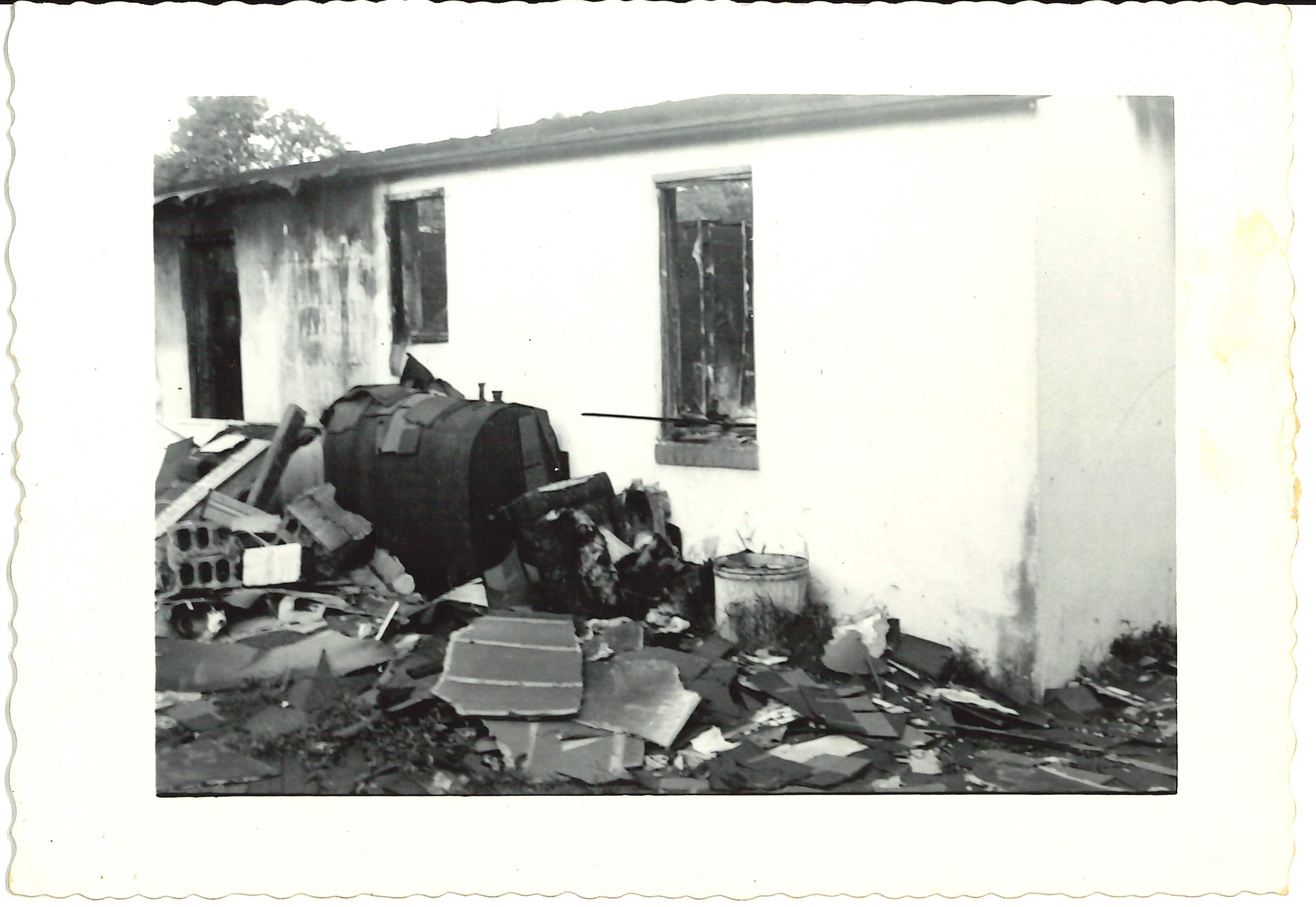
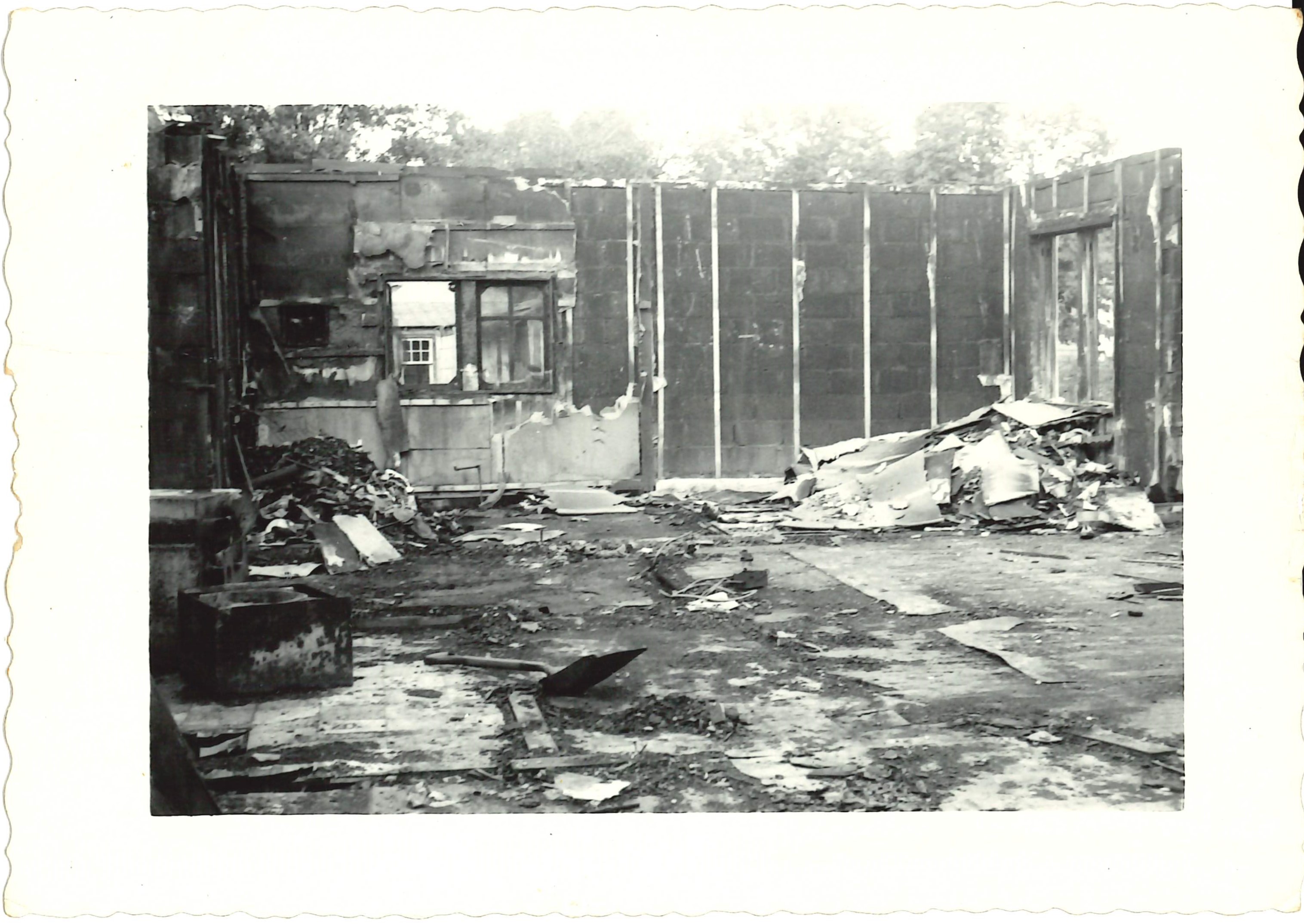
To make a long story short, I finished the house, so [that] we could move in, after I got out of school and started working. That's how the house just stayed there, being built little pieces at a time. When I graduated out of high school and started working, that's when we finished the house and we moved in. We had the bathroom inside and a heater in the basement, a big difference than what we were living in before.
 |
 |
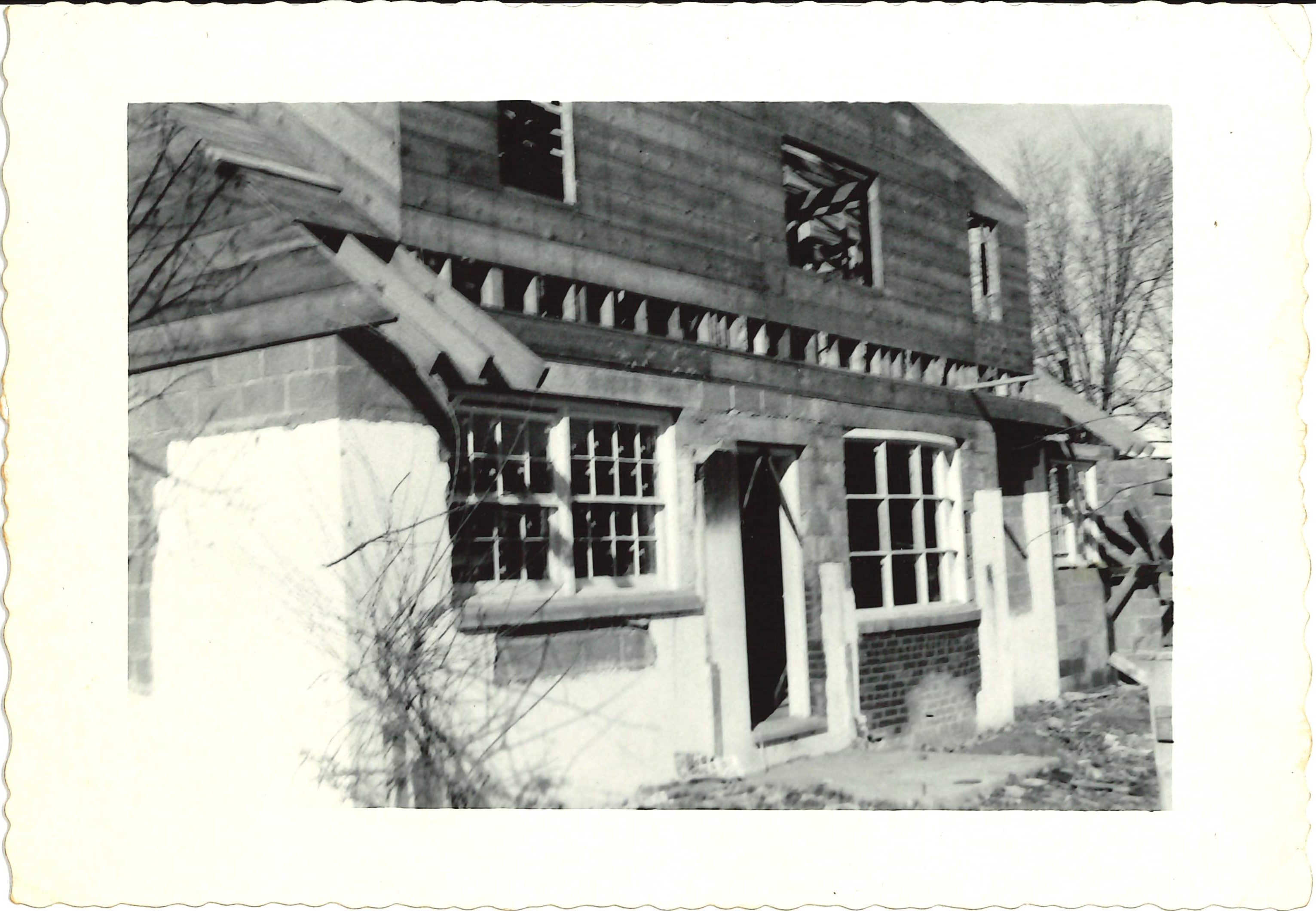 |
Figure 3: "The house my brother gave me to refurbish."
SI: Yes.
FV: My brother Harold, who's the seventh child, he was good at woodwork. He did the finishing touches on the house then, but it was a big living difference for my other siblings, who were still in school.
SI: The older siblings were out of the house by then.
FV: Oh, yes, they were out, out and gone, yes. Well, backing up, when we lived in the little house, my oldest sister, the one that was above me, she got married. We had no dreams that, at the time, they had no place to stay. They moved in, in the house that we were in, yes.
Here, we'd just gotten rid of my two older brothers and, now, my oldest sister and her husband moves in. Then, she had her first baby in that little house. Then, they got a house up on Eggerts Road. My father interceded with someone who had a house to rent and they moved up there.
That little house was [inadequate]. It's a wonder it didn't catch on fire (that house didn't catch on fire) and burn us all up, because that little church (that was to become the Center) had electric in it and had an electric meter. My father got permission from the owner of the church that we could hook up to the electric meter.
He could hook up to the meter and he would pay the electric bill. When he was given permission to do that, he hooked up to the meter and ran electric cord in the bedroom window that was alongside of that church. We had electric cords running all through the house. That gave us light; we even ran a refrigerator. I don't know where Dad found one of these refrigerators, had a big motor on top.
I think about that now, because I manage multi-family housing. One of the things you tell people is, you don't run electric cords. I said, "Good thing you weren't in my house when we were coming up." We had electric cords running all over, to give us light, to give us the use of the radio. The good Lord was with us. I mean, that's the only thing I could say.
SI: Did you go to that church or were you going to the church around the corner, the First Baptist?
FV: Yes, the little church there next to us was a Seventh-Day Adventist Church.
SI: Okay.
FV: And they would have church on Saturdays. We knew the families, the gentleman that had church there. He lived right here in the community and they let us use it.
As a matter of fact, he was the same one that, when we got funded for a neighborhood center, we didn't have a building. When we submitted the application to HUD [Housing and Urban Development] for a neighborhood center, they sent it back approved with the funds for only a director and an outreach person and a part-time secretary.
That's when I took over. I left my job at the Armory to become the Director of the Center. We were looking for a place for our community center and we ended up with that building. I got permission from--Uncle Step, we called him--Step Lipscomb. We got permission from him, at no cost to us. All we had to do was refurbish it the way we wanted. He didn't charge us any rent or anything. So, that's how we got the Neighborhood Center started.
SI: Going back a bit, can you tell me a little about the impact of World War II on your family?
FV: Well, World War II, what it did, it took my two brothers, two older brothers, in the service. My oldest brother was in the Navy and he didn't get any further than the Brooklyn Navy Yard for all the time he was in the service. It did help him when he got out. He went back to college on the GI Bill.
My next oldest brother, Frank, he was in the Army. He fought over in the Battle of the Bulge. He got wounded. He even got the Purple Heart, but he never received it, any of that stuff, until later in life. He finally got it just before he died. Senator Shirley Turner, they had the recognition ceremony in the State House for him.
READ: A 2000 Trenton Times Article on Mr. Vereen's Brother's World War II experience.
[Editor's Note: Shirley Turner has represented New Jersey's 15th Legislative District as its State Senator since 1998. From 1994 to 1998, she represented the 15th in the General Assembly.]
He told this story about when he was in the hospital. A colonel or one of the officers came around talking to all the men who were in the hospital. Then, he said he walked right by him, never said a word to him. He said, "I'll never forget that, how he stopped and talked to all the other men and never once stopped to say a word to me." Aside from that, that's the only effect it had on us.
SI: It sounds like you had a lot of chores and responsibilities around the house at a young age. Did you have time to do anything for fun or play sports?
FV: Well, I never played sports in school, because I never had time. I had to come back home after school to do my chores. Here, in this community, there was enough boys in the families--the families, some of them had large families like ours, but some had four, five, six--but there was always enough boys to make up a baseball team or a basketball team. Then, in the younger years, nine, ten, eleven, twelve, there was the lots right out here.
The whole community, in the evening, we would have baseball [and] softball games. The boys, the girls, even some of the older men, would be out there with us playing. Those who didn't play would be on the sideline, watching and laughing and talking, right out here, where the Crossing Inn was built. No, we had that.
When the Township, the Recreation Department, started with having baseball teams, league teams, the different sections of the town would have a team. We were part of that. The first year, we won the trophy, the softball team. There were about four or five teams, and the same way with basketball. We played basketball in the junior high school and we had a team, Eggerts Crossing. We won the first couple years. We won the championship of that.
READ: The Community Action Publication (April 1971) article on the championship.
No, I was busy with chores, like I said, wasn't anybody else. All the siblings under me weren't old enough to meet those responsibilities, so, I was the main character that had to do those things.
SI: I would assume all the livestock and the chickens were for personal use, for your family.
FV: Yes, yes.
SI: You never sold it to a butcher.
FV: Well, no; my father used to give a lot of stuff away.
SI: Okay.
FV: We killed pigs and the community would benefit from a lot of that stuff. Chickens, my mother used to sell eggs. The cow, the milk, my mother used to make butter, but we drank the milk. No, it wasn't none of that stuff for sale or anything.
SI: Did you have a garden?
FV: Oh, yes, yes, my father had a large garden. I had to work it, didn't have much help. Occasionally, he would get it started, and then, after that, it was mostly me. My mother would come out some time. Like I say, I'm thankful that my father did put those kinds of responsibilities on me. So, it sort of prepared me, yes.
SI: I am curious about your schooling. It was all local public schools, but what did you think of the quality of the schools and your teachers?
FV: Well, the school was good.
[TAPE PAUSED]
SI: All right.
FV: Well, the schools were good. Our parents never were involved with our [schooling], at least not with me in my schooling. In Eldridge Park, in grade school--at that time, it went from kindergarten to eighth grade--I can really remember my teacher in the eighth grade, who was more or less your counselor also. There were five Black kids in the class.
At the time, Lawrence Township didn't have a junior high school or a high school. So, after eighth grade, we went to Trenton, to junior school, to ninth grade. Then, we went to Trenton Central High School for tenth, eleventh and twelfth.
So, the teacher, the eighth-grade teacher, told us, told all the Black kids--I know I wanted to take, in ninth grade, classes that would start me on the path to going to college--she told all the Black kids that we couldn't handle that. She gave us all industrial arts classes and shop and that.
So, in ninth grade, just before I'm going to Trenton High, I told the teacher I wanted to take a business course. I took business math and typing, and a couple English and history academic courses. I did have sense enough to do that on my own.
That really, really helped me, as I didn't go on to college, but it was good that I did typing and all that. The business math that I had, it really helped me as I moved on, but, no, we didn't get the proper counseling in the early ages, stages, that the white kids got. It was no question that they took little interest in the Black kids.
Now, there's a friend of mine, Fred (Orlessy?), who is still living. I turned ninety last year; I think he turned ninety in January. He and I still get together and talk. He was really surprised, and he was in eighth grade [with me]. We started kindergarten together and we went through high school together, but he was surprised when I told him what this eighth-grade teacher had told the Black kids. He said, "I had no idea, Freddy," he said, "that she did that." I said, "Well, there was no reason for you to know."
I think most of the white kids that I knew that lived in Lawrence went on to college and whatnot. As I look back, probably was a better [outcome]--I wouldn't have done some of the things that I've done probably if I'd went to college.
SI: Were there other ways that they tried to kind of push the Black students onto a certain path?
FV: No, in your eighth grade, from your kindergarten to eighth grade, you all took the same courses, I mean, the same subjects, because you were in the same class. Right on from kindergarten to eighth grade, you didn't change.
Even as I look into my high school yearbook, you don't think about it, but I used to sit in class and look out the window. I'd see the white boys who were in, I guess, surveying classes. They'd be out there with whatever survey instruments that they had. They'd be outside being shown how to use the instrument.
I didn't pay any attention to it then, but I looked in my yearbook and all the clubs that were at the high school--and you name it, there was a club--there was only a handful of Black kids scattered in these clubs, throughout these clubs.
I show it to family members now, I said, "You can see how the white kids had such a head start on us just by being in these clubs," that that was essential for them in moving forward and going to college and whatnot, but we didn't have that opportunity.
SI: When you took me on the tour earlier, you mentioned that the railroad tracks kind of cut this part of town off from the rest. What else about the area is different now, compared to back in the time when you were growing up, that would have really affected you, like being cut off? I understand there was a trolley that ran through.
FV: Yes. The trolley line--it ran from Trenton to Princeton--stopped the year that we moved to Eggerts Crossing. Then, Conrail used the tracks. It would bring coal to Lawrenceville Fuel. Back in those days, Lawrenceville School, Lawrenceville Prep School, burned coal. Most houses--it was the time before oil burners came into being--most houses burned coal also. Lawrenceville Fuel, the Conrail used to bring a railroad car of coal.
[Editor's Note: Electric trolley service between Trenton and Princeton began in 1901 and ceased operations in 1940 due to a decline in passengers. Lawrenceville Fuel is an HVAC company that was established in 1925 in Lawrence Township, New Jersey. It provided ice and coal to homes.]
Then, there was a feed mill in Lawrenceville that sold feed for livestock, because this whole area was farmed. In Lawrence Township, within a five-mile radius, there was four cattle farms, and not to mention Pennington and Hopewell. It was real farmland. So, they used to bring boxcars of feed and whatever that was needed.
So, they ran back and forth, that trolley line (also, Conrail). There was two men, during the summer, that used to ride up and down the rail, to check the railroad ties and whatnot. One was an older white man and another younger Black guy. They had, it wasn't a motorized thing, it was one of those...
SI: Oh, handcars, handcarts.
FV: Yes, you pump up and down. When I saw them, I used to spend the day with them. They used to let me ride. They would even share their lunch with me. Every summer, they were out, going back and forth.
Even the Lawrenceville Prep School, during that time, sometimes, the Township would get the ashes from the school. That's what they would put on our road, on Landover, because, in the winter, it was mud and, in the summer, when it wasn't raining, it was dust. Yes, that, the tracks, really separated us from the rest of the town.
My brother and A.C. Brown went into business. They got the Township garbage contract for one year. I think they had it for two years. The men here, some of the men, worked on it. They picked the garbage throughout the town. I used to work on it, too, on weekends, on Saturdays, me and my younger brother Harold.
That's when you got a chance to see how the rest of the town was, looked. Then, you'd come back to your community and say, "Wow, what a difference. People got paved roads. They've got sidewalks. They've got curbs. They've got proper streetlighting." They've got all the good things that we didn't have. So, that's [why], when we got old enough, I started going to township council meetings. I said, "I want my community to look like the rest of the community and have the same amenities that they have."
Then, with the railroad tracks--we got a stigma attached to this community, which was hard to overcome. Environmentally, it was the worst area of Lawrence Township. As you see it, it's been a big change. That's the reason I want people to know a little bit about what it was, because people come here now, they don't realize that this community fought to make it what it is today.
SI: You graduated what year from Trenton Central?
FV: I graduated from Trenton High in 1951. I graduated in June. Right up the street, up at the Armory, there was, I think, four or five older men who did janitorial work, who cut the grass and whatnot. One of the men lived here in the community; my father knew him.
He told my father, he said, "Your son going to need a job?" He said, "Yes." He said, "Well, one of the men in our group are retiring." He said, "If your son is interested," he said, "he can come up and apply." So, I did. I graduated in June and I took a job up there as an "armorer"--or that's a good word for being a janitor and custodian. In September, I started up there and I stayed there for seventeen years.
While I was there, I went into the service. Then, when I came back from the service, I went there. I stayed there until I became the Director of the Neighborhood Center. In some ways, it prepared me, because I was working under older men. My boss was an older man.
I cleaned floors, cleaned offices, washed windows, cut grass, did a lot of those things of that nature. That somewhat helped me when I became a manager of housing developments, that I had done all that stuff and really knew what to tell men to do, to prepare. It really helped me, but I wasn't making much money.
When the position for the Neighborhood Center came back at eight thousand dollars, I was only making about 4,500 a year up there. I was married then, but, to supplement my salary, I was working two jobs, actually, two full-time jobs, and working part-time jobs also.
I told my wife, I said, "I'm leaving behind seventeen years up there," I said, "but I've got nothing to lose but seventeen years, because there's nothing to look forward to up here." So, I took the job at the Neighborhood Center and it was a blessing that I did.
SI: I want to know a bit about your time in the service. You got in around 1956--is that right?
[TAPE PAUSED]
FV: Yes, I went into the service in 1956. I went into Fort Dix and I took basic training in Fort Knox, Kentucky. Then, I took my other advanced training, which was another eight weeks, to get my MOS. That's a Military...
SI: Occupational Specialty.
FV: Yes, yes, which was to be a supply clerk. So, the other thing, when I came home--before being sent to Japan, I came home--my wife and I, while I was in basic training, we had planned on to get married. Then, I mean, she had gone through getting invitations and getting fitted for her dress and all that. Then, we changed our mind. We said, "No, let's wait until I come home."
Then, when I came home, we changed our mind again, but we didn't tell anybody. We eloped. Her sister (yes, her oldest sister) lived in Philadelphia and was a community person. She knew everybody and people knew her. She had called her, told her that we wanted to get married. I only had one day, one day left.
So, we went to Philadelphia. I stayed at her house. She lived in Lambertville and I stayed at her house. We got up early that morning. You had to have the blood test for three days, but she knew a doctor who backdated the date for us. Her cousin worked at Wanamaker's and he got us a couple rings, wedding bands. We went to Camden and got married by a Justice of the Peace.
Then, I came home and I had orders. She drove me to Newark Airport. Now, this is all happening in the same day. She drove me to Newark Airport and I caught the plane to Fort Lewis, Washington, and then, shipped out for Japan. I didn't see her for eighteen more months.
SI: Wow.
FV: Sometimes, I'd get her mad and I said, "The best years of my life was when I was in the service." [laughter] She didn't take that too lightly.
Then, when I got to Japan, my MOS was a supply clerk. So, I went to a Signal [Corps] outfit and they needed a supply clerk. At the time, they had a supply sergeant and they had a clerk in there working with the supply sergeant. The supply sergeant had orders to leave, to come back to the States in a month. The clerk got an early leave and he left before the supply sergeant. So, when the supply sergeant left, I was there by myself.
I didn't have the rank to be in charge, so, they put a sergeant in there, who didn't know as much as I knew. They just put him in there because he had the rank to be in charge. So, I basically ran the supply room.
We had to change sheets. Once a week, we'd change sheets. They had to bring their sheets down. We had all the guns, all the rifles, that were in the [facility], where guys had to come out and come in every once in a while. There was a lot of stuff that went on during the day that I learned on-the-job.
Later, it really paid off because, about two or three months before I was to leave to come back home, I got orders to go to Korea. It was in the wintertime. So, the Company Commander came to me and he said, "Vereen," he said, "do you want to go to Korea?" I said, "No, sir, for three months?" So, he said, "All right, well, we'll see what we can do."
He got me out of it. Then, my orders changed, but, during my staying there in Japan, he knew what I had done to keep the supply room going. The other thing, I played sports there. I played on the basketball team, the battalion basketball team, and I played on the baseball team. I did pretty good on both.
The other thing that happened, we were right outside a little village. The men, the guys, on weekends, would go out or go into Tokyo--Tokyo wasn't too far from where we were. They'd either get high or drunk. They'd catch a taxi and they'd jump out the car, run in the barracks and wouldn't pay the guy.
SI: Wow.
FV: That happened about three or four times. The next day, or a day or two later, the taxi driver would come with a policeman. The Company Commander would line us all up out in front of the barracks. The taxi driver would walk down the rows of men, trying to pick out this guy. Every time, they'd pick me out.
The Company Commander knew it wasn't me; nothing would ever happen to me. So, we'd just go, but we would all laugh about it. After a couple times, we would just assume that they were going to pick me out because I was big and Black. Evidently, every time it happened, it was a Black guy that wouldn't pay him. So, that was an experience within itself.
SI: The Company Commander never did anything to you.
FV: No.
SI: Good. Was it a diverse unit or was it mostly African American?
FV: No, it was diverse, yes.
SI: Okay.
FV: There was always more whites in the company than Blacks.
SI: Stepping back, since you got married before you went overseas, how had you met your wife?
FV: Well, I met my wife, I met her the first time--like, I belonged to the Baptist Church. When I was young, just a teenager, we used to sing in the choir and in the chorus and whatnot. There was a Black church, a Baptist church, in Lambertville.
Now, my wife didn't go to the church. Her family was Episcopalian and they went to Episcopal church, but she used to hang around. Her family was the only family that went to the Episcopal church. The other families went to the Black churches. So, she used to hang around with the Black kids.
So, the first time I met her was--our church would go up to visit the Baptist church in Lambertville, New Jersey, where she lived, and their church would come back here to visit our church in Eggerts Crossing. The time we went up to their church in Lambertville, my wife and some other girls were on the outside of the church. That's where I first met her. There was nothing to it then; I just saw her and whatnot.
Then, the next time I met her, I used to bartend. When my brother became a partner in the Crossing Inn, I used to bartend on weekends. She used to come down with some of her friends from Lambertville. That's how I met her later in life. Then, we started seeing one another.
Then, she went to nursing school at St. John's Episcopal Hospital in Brooklyn [Queens]. That's when I really started dating her. She would come home on weekends. She stayed up there while she was going to school, and then, she'd come home on weekends. I'd see her on weekends, yes.
SI: Why did you go into the service in 1956, as opposed to earlier? Were you drafted?
FV: I was. That's when they were still drafting people.
SI: Yes.
FV: And I was drafted. I didn't have much choice.
SI: Were you able to get deferments before that, because you worked at the Armory, or was it just your time?
FV: No, it was just my time.
SI: Okay.
FV: Yes.
SI: How did you feel about going into the service at that time?
FV: Okay. It was a good experience. As a matter of fact, I say, right now, they should bring the draft back and put these young boys who are just on the street into the Army, give them some discipline. Some of them, you're not going to change, but the majority of them, you will get good discipline and it will help them. They can learn a trade in the Army. I think the Army would be good for a lot of these young kids who are just hanging out on the streets now.
SI: What was Fort Knox like for you?
FV: Well, we never went off the base, I mean, into the town of Fort Knox. You either went into Tokyo, the City of Tokyo--I mean, that's in Japan.
SI: Yes.
FV: During basic, we never (at least I never) went off base and went into town at Fort Knox. No, all the while I was there, it didn't even occur to me to go into the town.
SI: Were you pleased with the assignment you got?
FV: Yes.
SI: Were you hoping for something else?
FV: No, no.
SI: All right.
FV: You just took what was given you, yes, not unless--I know there were some young men who wanted to go to Officer Candidate School, who did, but I never thought about making the Army my career or anything.
SI: You mentioned going to Tokyo. What would you do on leave?
FV: Well, you'd go to the movies. They had, like we have Starbucks and stuff here (and I know they have Starbucks all over the world now), but, during that time, they had like music coffeeshops or tea shops (or whatever you wanted to drink).
They had particular types of music in each one. You could go and sit and have coffee or tea in a classic or country-and-Western [shop]. Whatever kind of music, there was a coffeeshop that you could go in and just sit and listen to the music.
They had a nightclub particularly for servicemen that they had, that you could go to that, had entertainment and drinks and whatnot, where they had an upstairs, downstairs, where they had shows and things, singers and whatnot. It was especially for servicemen. You could go to restaurants. We just spent time, go to the movies. They had movies that had the latest movies that were playing in the States.
Riding the subways then, that's where our first experience came, the subways were always jammed, the subway cars. The conductors would stand on the outside and just push people in the door. It was so strange. You're tall; all those people are short. When you got into a subway car, you could look right down over the heads of the whole crowded aisle of the car. You just went in for a day and spent a day of leisure and whatnot.
The other good thing, they had the PX post exchange stores. They had large PX stores that had all American-made stuff for you, that you could buy. I used to ship a lot of stuff home.
[TAPE PAUSED]
SI: We had been talking about going into Tokyo and what you would do for recreation in Japan. Did you have much interaction with the local Japanese?
FV: No, I didn't. One thing they told us, they told us not to eat any food in the local restaurants, because I know I used to look at their vegetables, their vegetables used to be three or four times the size of ours.
SI: Wow.
FV: I mean, huge, and I wondered why. Then, I found out--they use human manure. They have places out in the field where they have, like, pits where they dump all their cesspool stuff in. I guess that's the reason why their mosquitoes were large also, wow.
They said for us not to eat their food, because our system was not used to that food being grown by human waste. So, we never (at least I never) did.
Some of the guys used to go out into the local community a lot. I didn't, I didn't. There was a group of guys that I used to [know], they used to travel a lot. Every once in a while, I would take a trip with them, to a different town in Japan.
Then, it sort of rang a bell with me--when we had an outhouse, with having a lot of kids, a lot of family, your outhouse was placed over a hole that you dug. When that hole got filled, you would dig another hole, then, move the outhouse. I can remember, where we used to have the outhouse, how we used to grow collard greens in that area. We were wondering why they would grow so large, but, when I got over in Japan, it rang a bell.
SI: Yes.
FV: I said, "Now, I realize we were growing collard greens over those holes that we had those outhouses." It was amazing. You walked through the stores, I mean, you walked through the open shops during the summer, and see those vegetables, that they were huge, yes.
SI: Do any of those trips that you took stand out in your memory?
FV: There's only one, that me and two other boys went. I forget where it was, but it was close to Mount Fuji, around the base of Mount Fuji. That's the largest mountain in Japan. Actually, you could see it on a sunny day, the snowcaps, from where we were stationed.
The men used to go [for] training right up there at the base. Once a year, the men had to go on a week's training with their rifles and whatnot up at the base of Mount Fuji. I never had to go since I was in the supply shop. I never had to take that training with them. That's the only one I recall. We stayed at a hotel around that area and caught the train a couple times.
Since that time, I've been back to Japan. I went with my friend, Edith; her granddaughter was there teaching. This is about eight years ago, eight or nine years ago. (It might've been a lot longer than that.) Time goes by so fast, but she was over in Japan teaching. We said, "Well, now's the time to go, while we've got someone who can show us around."
We went and I think we spent close to two weeks over there with her. While I was there, in one of the hotels we were staying, I went up to the guy behind the counter and I said, "In 1956, I was here at a camp called Camp Drake." I said, "Could you pull it up and see if it's still in existence?" He said, "Well, come back later." He said, "I'll check it out."
[Editor's Note: Camp Drake was a US Air Force and Army installation near Tokyo, Japan.]
So, the next time I came and I asked him about it, he showed me some pictures on the computer screen. He said, "It's all vacant land now," wasn't nothing there.
SI: Yes.
FV: Yes, but, during that trip, we stayed at (she got us a place at) an old hotel that had hot tubs with water running, actually, water running from the ground, all the time, into this hot tub. We had a room. We had two rooms with the beds on the floor. They served us our food on the floor.
It was a terrific experience. I hadn't experienced that; I hadn't done any of that when I was in the Army. We took a ride on the bullet train to see, oh, Hiroshima.
SI: Okay.
FV: We went to the museum there. I'll tell you, that's an experience, to be walking through that museum, to see the actual pictures of what happened and somewhat feeling guilty when you're around other Japanese in there looking at that, too, because it's really devastating to see actually what it did to people, those bombs and whatnot.
[Editor's Note: The Hiroshima Peace Memorial Museum, a museum dedicated to the August 1945 Hiroshima bombing and its victims, was established in 1955.]
That was a good trip with her granddaughter, who spoke a little Japanese, enough to get by with, whereas we would've had a problem if we didn't have her with us.
SI: When you were there, did any Japanese work on the base?
FV: Oh, yes, yes. You had your truck drivers and your waitresses in your cafeteria. They were all Japanese. Your cooks were Americans. They were sergeants or whatnot, but they had people also working in the kitchen with you. The cooks were actually Americans, but the waitresses in your cafeteria were Japanese. Your truck drivers, bus drivers were all Japanese.
SI: You were there for eighteen months.
FV: Yes.
SI: When you came back to the United States, did you have any other work that you had to do?
FV: Yes, you had an obligation for six years. So, you have to come and stay in the National Guard for six years. So, I was in the National Guard right up the street, right where I was working.
SI: Okay, and that probably all counted as the same time.
FV: Yes, it's six years.
SI: Service time and Armory.
FV: Yes.
SI: After you came back, you were doing the same type of work you described before.
FV: Yes, yes.
SI: Is there any other aspect of your life before you made the switch to the Center that we did not cover, anything that we missed?
FV: Well, like I said, when I came back from the service, I was working two full-time jobs. I was working the job up there and I was working--my father was still working at Roller Bearing Company of America and I got a job. He got me a job, working in the evening.
[Editor's Note: RBC Bearings was established in 1919 in Newark, New Jersey. In the 1950s, the company opened a production facility in West Trenton.]
Right after I left the Armory, I'd go to work at [the factory] up until--I worked until twelve o'clock. Then, on the weekends, I'd tend bar. My brother had the bar, and then, he had a bar in Trenton. I'd go work on the weekends there.
At the same time, I started building this house. So, I was living right next-door to the house, next-door, upstairs, my wife and my daughter, while building this. Yes, so, then, when I got the job as the Center Director, at least I didn't have to work two full-time jobs. I was working at the Armory, and then, tending bar. Really, I didn't have much time to do anything.
SI: Yes.
FV: I didn't even have time to spend with my daughter. I got hurt at the bar one night, trying to break up a fight. I had to stay home for a couple days--no, about a week or two. So, my wife told me, she said, "Well, maybe now, you'll get a chance to be with your daughter," because I never had a chance to be with her. I was on the go all the time.
SI: All right, we will end there for today and come back another time and talk more about your later career with the Center, and then, working on the different housing projects.
FV: Yes, that's good.
SI: Thank you very much for today. I really appreciate it. I appreciate you taking me around for the tour. I will probably have questions about the earlier period when I come back, but, for today, you have done a lot of work for me and I appreciate that.
FV: Okay, I appreciate you taking the time to do this.
SI: Yes, all right.
-------------------------------------------END OF TRANSCRIPT--------------------------------------------
Transcribed by Jesse Braddell 4/16/2024
Reviewed by Shaun Illingworth 7/31/2024
Reviewed by Fred Vereen, Jr. 10/8/2024