About the project
The project preserves and explores the memories of both German and Russian veterans from the battle of Stalingrad. Facing Stalingrad illustrates competing recollections of the battle, and provides us with two divergent, living cultures of memory.
Fought over a duration of six months, the battle of Stalingrad (1942/43) marked a tidal shift in the Second World War. Both the Nazi German and the Soviet regimes went to extremes to force the capture, or defense, of the city that bore the Soviet dictator’s name.
Amidst such intense mobilization on both sides of the front, how did enemy soldiers make sense of the war? What animated them to fight, and to fight on against formidable military odds? How did their views of themselves and the enemy evolve during this critical moment in world history?
These are questions that I posed for a book project which was to observe in comparison and interaction the wartime experiences of German and Soviet soldiers and civilians. To retrieve the intense emotions unleashed in wartime communities of love, hatred, and destruction I searched for personal documents from the time of the battle – diaries, letters, and photographs.
Especially in Russia, state archives house few personal records from the war, and so the search for these documents led me to the doorsteps of Russian and German survivors of the battle.
I discovered a domain of the war experience that no archive could reveal.

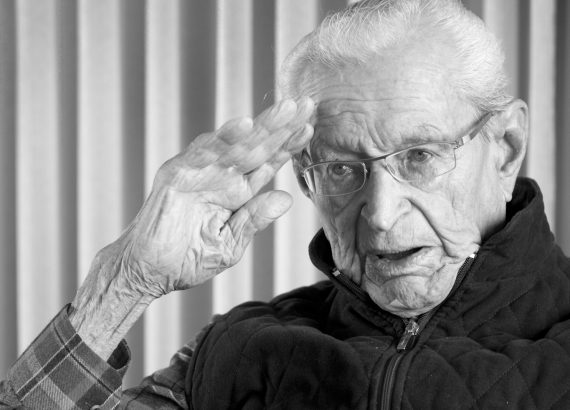
From B.S. Kryzhanovsky interview
Some of the veterans willingly shared their letters and photo collections from the war, but the personal encounters made me aware of something he had initially overlooked: the enduring presence of the war in their lives, and the strikingly different ways in which Germans and Russians engage with war memories. The battle may lie almost seventy years in the past, yet traces of it are powerfully etched into the bodies, thoughts, and feelings of its survivors. Here was a domain of the war experience that no archive could reveal.
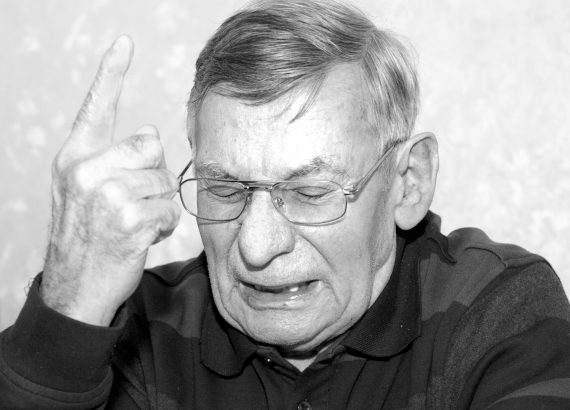
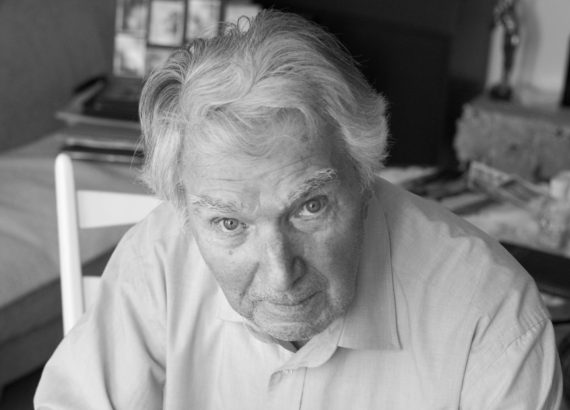
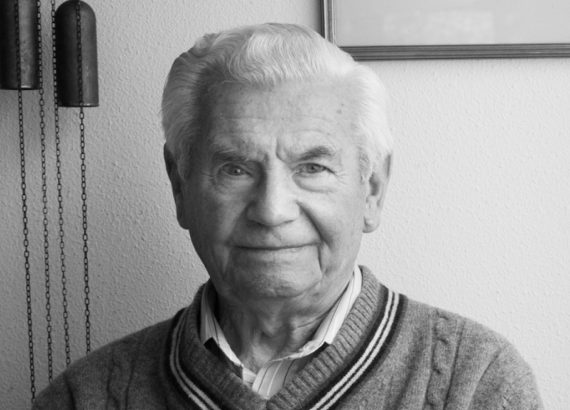
This experience pervades the veterans’ homes: it whispers through the pictures and artifacts from the war that hang on walls or are safely stowed away; it holds itself in the straight backs and courteous manners of former officers; it flares up in the scarred faces and limbs of wounded soldiers; and it lives on in the veterans’ simple gestures of sorrow and joy, pride and shame.
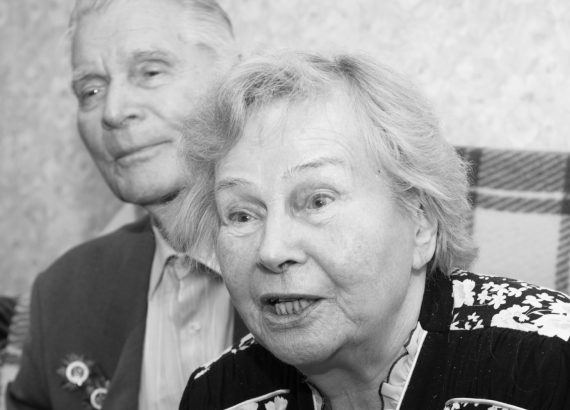
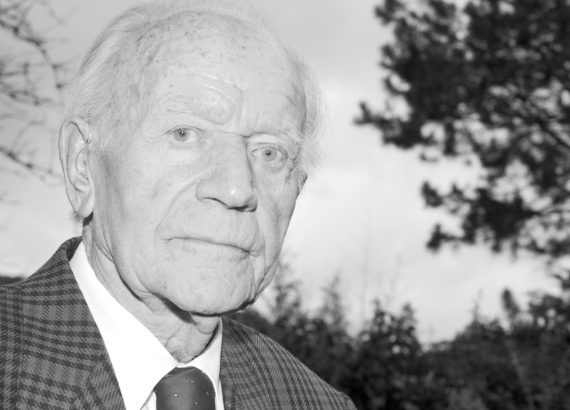
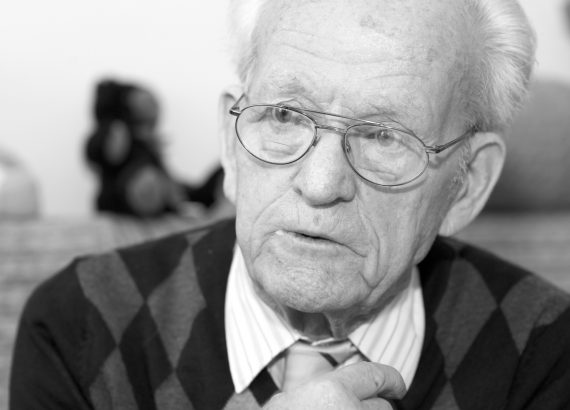
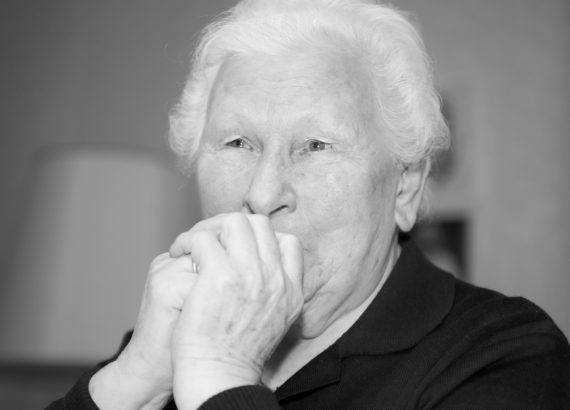
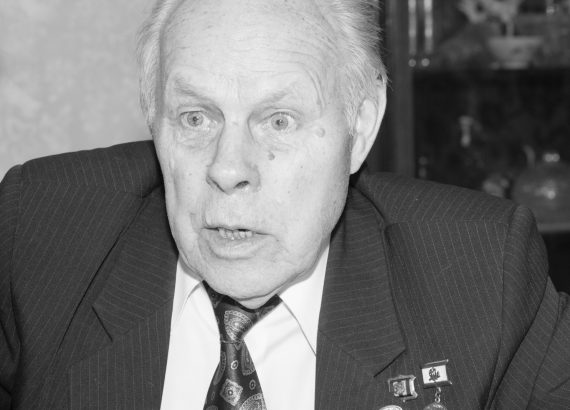
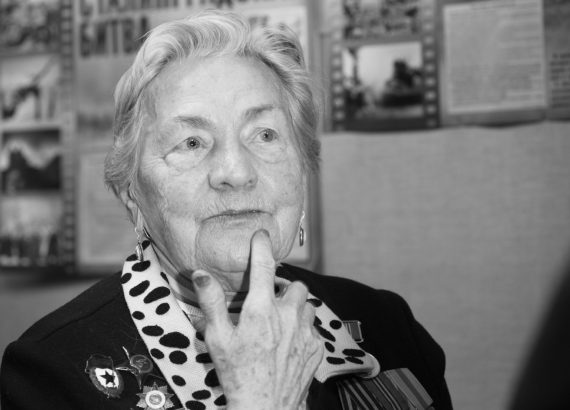
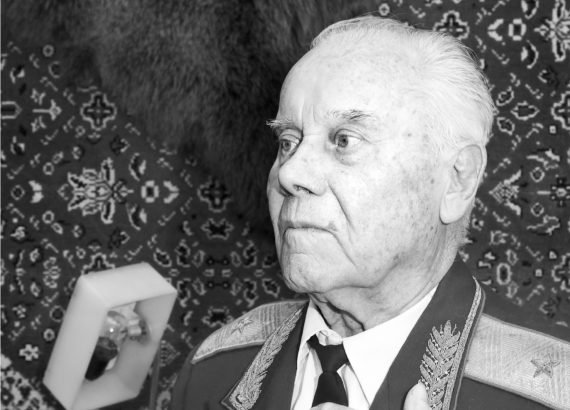
To fully capture the war’s complex, enduring presence required a camera in addition to a tape recorder. Emma Dodge Hanson, an accomplished photographer and a friend, kindly accompanied me on my visits. In the short span of two weeks, Emma and I traveled to Moscow and a range of cities, towns, and villages in Germany, where we met nearly twenty veterans in their homes. Emma has a singular ability to record people when they are at ease with themselves, nearly oblivious to the photographer’s presence. Shot with natural light whenever possible, the pictures capture the gleam reflected in the subjects’ eyes. The richly nuanced images bring out the fine wrinkles and furrows that grow deeper as the veterans laugh, cry, or mourn. Studied together, the hours of taped testimony and the stream of photographs captured portray the veterans residing in their recollections, as real to them as the furniture surrounding them.
Emma and I were invited into homes both modest and ornate, we spoke with decorated war veterans as well as simple soldiers, and we watched their hosts celebrate or silently grieve. We recorded some men changing into parade uniforms that looked huge on their shrunken bodies, and we held in our hands the small objects that had sustained survivors through war and the prison camps. In essence, we observed the workings of two contrasting cultures of memory: the haunting shadows of loss and defeat in Germany, and the broad sense of national pride and sacrifice in Russia. Uniforms and medals were much more widespread on the Soviet than the German side, and Russian women claimed a more active role for themselves as participants in the war. In German storytelling, Stalingrad often marks a traumatic break in the person’s biography. Russian veterans, by contrast, tend to underscore the positive aspect of their self-realization in war, even as they confide memories of painful personal loss.
Soon the veterans of Stalingrad will no longer be able to discuss the war and how it shaped their lives. This makes it imperative to record and compare their faces and voices now. Of course, the manner in which participants reflect on the battle nearly seventy years later should not be equated with the terms in which these individuals experienced the war in 1942 or 1943. Each individual’s experience is a linguistic construction, socially shared and historically unstable.
Their recollection of World War II thus inherently evolves over time, reflecting changing social attitudes toward the war. Yet this shifting narrative can provide us with crucial insights: both about Stalingrad itself and the vacillating nature of cultural memory.
(Source: Jochen Hellbeck, “Facing Stalingrad: One Battle Births Two Contrasting Cultures of Memory,” Berlin Journal 21. Fall 2011)
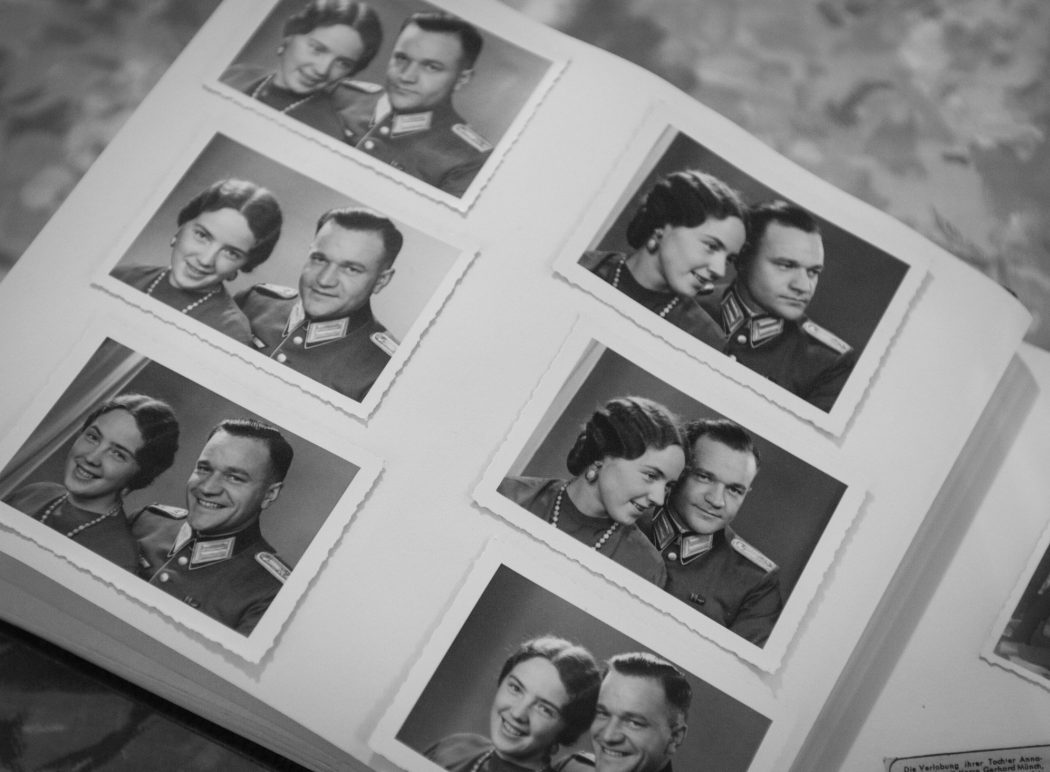
From G. Münch interview
Project Contributors
Jochen Hellbeck is Professor of History at Rutgers University. He is currently preparing a book on the Soviet experience of the Nazi German occupation regime in World War II. His award-winning publication, Die Stalingrad-Protokolle. Sowjetische Augenzeugen berichten aus der Schlacht [= The Stalingrad Transcripts: Soviet Eyewitnesses Report from the Battle] (Frankfurt: S. Fischer, 2012), is being translated into seven languages, and will shortly appear in English translation, as Stalingrad: The City that Defeated the Third Reich. Hellbeck is also the principal editor of Russen und Deutsche im Zeitalter der Katastrophen [=Russians and Germans in an Age of Catastrophe] (Moscow: Rosspen, 2012). His planned comparative study of Germans and Russians at Stalingrad, which triggered the “Facing Stalingrad” project, is now on the back burner.
Emma Dodge Hanson is a photographer with a wide-ranging portfolio of portraiture works. She brings to her work a singular perspective and casual grace that is both fresh and candid. A non-profit activist and world traveler, Emma lives in Saratoga Springs, New York, with her husband and two children.
Dina Fainberg is Assistant Professor of East European Studies at the University of Amsterdam. She served as the Assistant Managing Editor of the project.
Noreen Brenner translated the German interview transcripts into English.
Vitaliy Eyber translated the Russian transcripts into English.
The design company Playfields (London) created the Facing Stalingrad website in 2014. With support from the Rutgers University School of Arts and Design funding from the Rutgers Oral History Archive, the site has found a permanent home in the Rutgers Oral History Archives (ROHA). The conversion and migration of the project website is the work of Jeongeun Park, Associate Director of ROHA.
ROHA documents the life experiences of New Jersey residents and/or Rutgers community members through its own interviews and in partnership with internal and external collaborators. The archives also support the work of Rutgers faculty and graduate students through archiving and managing oral history collections.
The project was generously supported by the Rutgers University School of Arts and Sciences and the American Academy in Berlin.