

[Editor's Note: Mr. Vereen has provided a number of photos and documents to supplement his oral history. You can find them throughout his interview series transcripts as well as in this gallery on the Rutgers Oral History Archives website.]
Shaun Illingworth: This begins the second interview with Fred Vereen, Jr., on April 10, 2024, with Shaun Illingworth in Lawrence Township, New Jersey. Thank you very much for sitting down with me again. Last time, we got up through your work at the Armory. In 1967, you got a job putting together the Community Center. I want to hear that story, but we should talk about the War on Poverty first, since this Center grew out of the programs that were started there.
[Editor's Note: In his 1964 State of the Union address, President Lyndon B. Johnson announced a "War on Poverty," which was soon followed by the passage of the Economic Opportunity Act of 1964. The legislation created the Office of Economic Opportunity and programs such as Job Corps, VISTA, Head Start and the Community Action Program.]
Fred Vereen, Jr.: Right. Well, in 1965, when Lyndon Johnson was President, he started what they call the War on Poverty and the Community Action Program, where communities throughout the country could start a local Community Action. First, the county, Mercer County, started the Mercer County Community Action, and then, the municipalities under Mercer County could start their own under the county.
Our township, Lawrence, called us all together, called the community leaders and churches together. The Mayor at the time was Mayor Chuck Connell. At the time, I was the President of the Eggerts Crossing Civic League. So, he called me, and some of our members were part of the group. We started the Community Action Program. He made a gentleman by the name of Ralph Simon the temporary chairman and Ralph carried the program. We had meetings. We started having meetings at Lawrence, at the municipal building.
[Editor's Note: Charles E. Connell (1924-2012) served Lawrence Township as mayor and as a committee member.]
Then, well, all of the group agreed that Eggerts Crossing was the area that had the most need. We should have the Neighborhood Center, the meeting places, in the local church. So, we started having meetings at the Baptist church here in the community. After several meetings, Dr. Simon said, "Fred, I think that you should be Chairman of the Council."
I didn't say no, but I was skeptical. Aside from the Civic League, it was the first organization that I ever became in charge of--and so, I did. They broke it into committees. There was a health and welfare committee, there was an education committee, there was a social action committee. So, they said, "Well, we [need more information]."
Then, I think it was the Mayor, yes, the Mayor, designated two ministers. One was Reverend Dana Fearon of the Presbyterian Church of Lawrenceville and Reverend Norman Kindt, who was the Minister of Lawrence Road Presbyterian Church. He told them [that] what he would like for them to do was to do a survey of the poverty in Lawrence Township and find out what the needs were in the community.
[Editor's Note: Reverend Dr. Dana Fearon, III, served as the Pastor of the Presbyterian Church of Lawrenceville from 1960 to 2002. Reverend Norman Kindt served as Pastor of Lawrence Road Presbyterian Church from 1960 to 1983.]
So, they came back with their assessment, that the greatest poverty was in Eggerts Crossing and the need in this community was housing and the next thing was education, they would like. The other thing was that there should be a building of some kind in the community that you could bring in social agencies, state and county agencies, a place where people could come and meet them. They could help them go through all the paperwork to help them meet some of their needs.
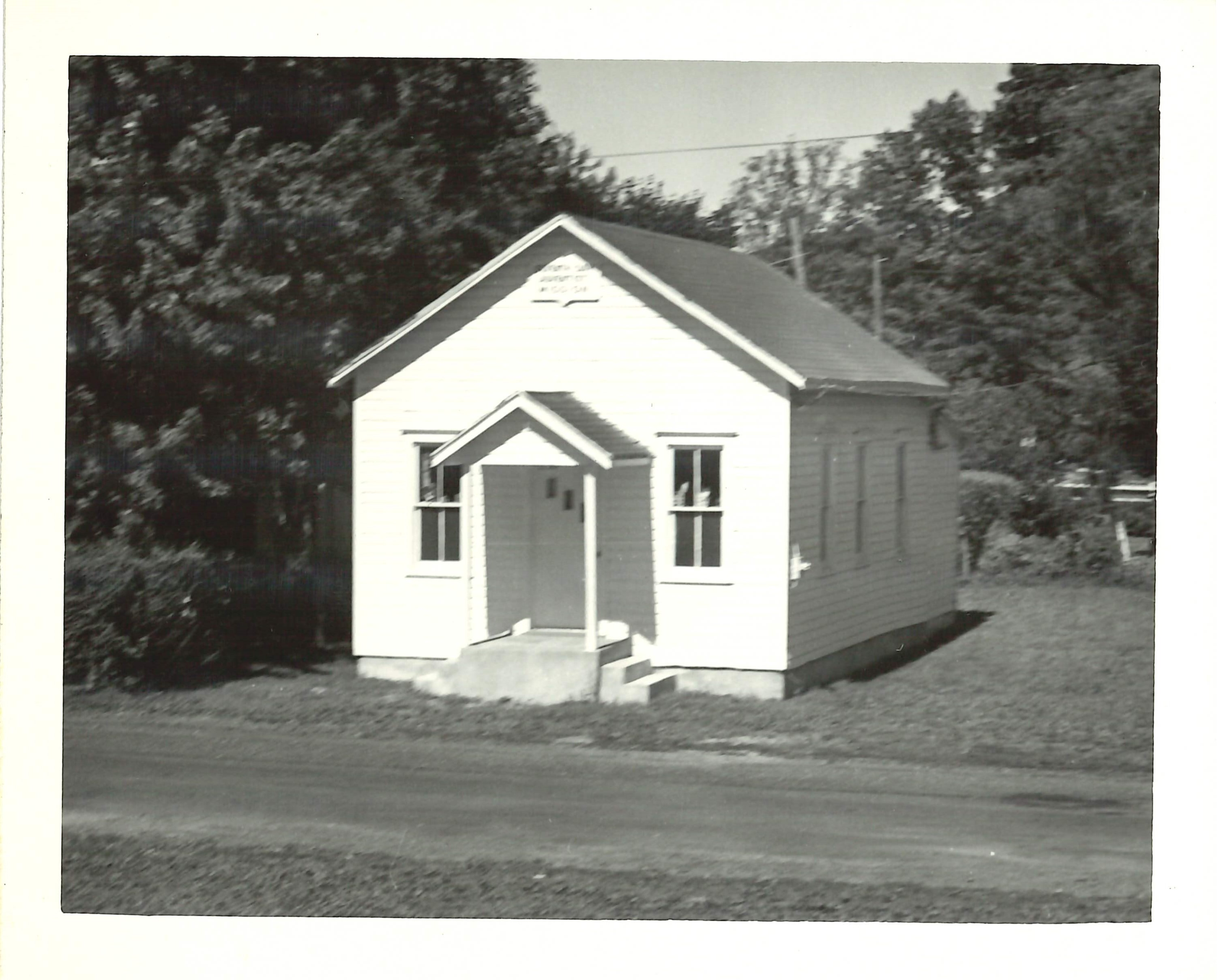
So, there was a committee established to find a building somewhere in our area that we could start a community center. After surveying and checking out buildings, the only place that was available was the little church. It was a Seventh-Day Adventist church and it was right next-door to the house that we moved into in 1941, the little bungalow that we lived in.
So, I knew the person, Step Lipscomb (we called him Uncle Step), who used to have services. They weren't using the building anymore. I knew the person; it was a Seventh-Day Adventist. He would have church there on Saturday mornings, but, then, they stopped having services. So, he lived here in the community.
So, I went to him, I said, "Would you be willing to let us use that as a community center?" He said, "Yes," he said, "but you'll have to fix it up and do whatever you need. We won't charge you any rent." So, we signed a lease with him.
We sent an application to HUD [Housing and Urban Development] for a community center. We had, in the application, funds for refurbishing the building, because it had no running water in it. The only thing that it did have was electricity.
In the little house that we lived in next-door--I might have said this before--my father got permission from Mr. Lipscomb to tie into the electric meter, so that we could get electric. It had, again, no running water. Windows were broken. The weeds had grown up all around the building.
HUD sent our application back for funding, but only for a director and an outreach person and a part-time secretary. That's all the funds--no money for rehabbing, no money for building expenses or anything.
So, at the time, I was working at the Armory, making 4,500 dollars a year and working another job to supplement my income, because I was married then. So, when the application came back approved for a full-time director, I think it was at 8,100 dollars. That was just about double what I was making at the Armory, and I was doing community work anyway.
So, I quit my job at the Armory. I discussed it with my wife, because I had been there seventeen years. I was a little skeptical at first, because it was seventeen years of my life at this one place, but, then, as my wife and I discussed, there was no future there for me. I wasn't making that much money anyway. So, I left the job and became the full-time director.
My community outreach person was a lady called Edith Hendricks, who lived right here in the community, who grew up with us. Edie was our outreach person and she was a compassionate and caring person, did a lot of stuff for people and really helped make the Center work.
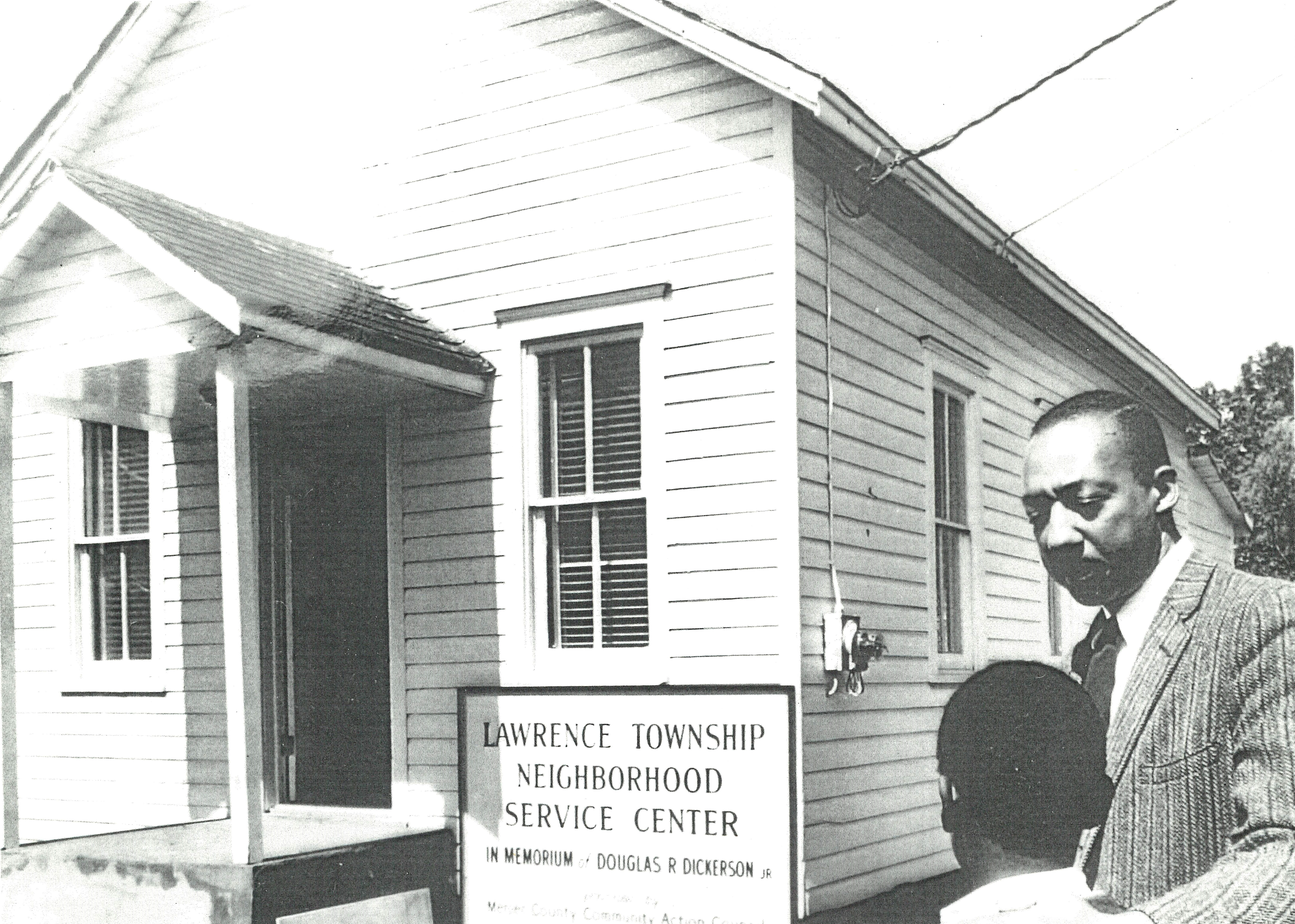 I took the job, the position, I think it was like in August. We were having Community Action meetings, monthly meetings. We had no money. So, I told folks what we needed.
There was a local hardware store in Ewing, not far from here, that I used to go for my own personal supplies and got familiar with the owner. I said to him, I said, "I have this job," and I told him, "this position and this building that we are refurbishing for a community center." I gave him a little background on it.
He said to me, he said, "Well, Fred, if you're willing to do that," he said, "you can come here at any time, get anything that you want, anything you need," and he said, "won't be an expense."
Figure 1: Mr. Vereen, Jr., with a young person at the original Center.
SI: Wow.
FV: Then, there was another person, Ruth Gage, whose husband was in real estate and she was on our board, on the Committee. She said for me to write out--her husband told her to have me write out--a list of what we needed--paint, supplies, anything.
SI: Yes.
FV: I wrote out a long list. He had a truck and delivered all the stuff I needed. I got people in the community to help refurbish it. A.C. Brown, who built cesspools and that stuff, he had backhoe equipment, he had men working for him. He came in and ran--we had an outside well at my house next-door, at my mother and father's house, where I was raised--he dug the line and hooked [it] up, ran a water line from our well over into the building.
Then, we got Lawrenceville Fuel, who came in and gave us a big discount in hooking up a toilet and the running water and a heating unit, a hot-air heating unit. At the time, there was a program called Neighborhood Youth Corps.
[Editor's Note: The Neighborhood Youth Corps was established and funded by the Economic Opportunity Act of 1964 to provide jobs to individuals aged sixteen to twenty-one in communities, such as clerical work, janitorial work and landscaping work, to earn a wage and to learn skills.]
SI: Okay.
 FV: That was funded through the federal government, where, in the summer, you could employ youth. They would work, I think, six hours a day and they were paid through the federal government. So, I had four boys who scraped the outside and painted the outside of the building, cut the weeds, cut the trees that were growing around the building and cut the grass.
We opened for business in October. Two months after we got the funding, we opened for business in October.
SI: Wow.
Figure 2: Neighborhood Youth Corps workers fixing up the Center.
FV: It wasn't three months before we had outgrown that little building. So, we established a community credit union, which was three members, two members and myself. We started it with five dollars a share. Then, we became part of the New Jersey Federal Credit Union Association.
READ: The Community Action Publication (January 1971) article advertising the credit union.
The thing about the credit union, we (the outreach person) signed up families. She was able to sign up families to join the credit union. We got people like from the Presbyterian church and other people who could put money into the credit union, so [that] our members, the community people, could borrow money.
We got people to sign up who were on welfare. At the time, welfare recipients could not have savings accounts in banks, but we signed them up anyway. We had families that signed up for the credit union.
Tell you another story about the credit union--we had service organizations, like the Kiwanis, the Lions, even some of the churches. Every year, the Kiwanis would come and they would bring toys. Thanksgiving, they would give baskets. So, after we got the credit union going, the President of Kiwanis Club came to me. He said, "Fred, we're getting ready for Christmas. We want to know when to bring the baskets and toys."
I told him, I said, "Well, I don't want it this year." He said, "Why?" I said, "Well, we have our credit union." I said, "We tell our members to come and use your credit union to buy toys and clothes and stuff for Christmas." I said, "Our purpose is to get people to become self-sufficient." I said, "As long as they're receiving stuff for nothing, the longer it will take them to become self-sufficient." He didn't like that.
SI: Oh.
FV: He said, "Why?" I said, "Well, I'm sorry," I said, "but it's time for us to make a change." He felt bad because they couldn't give a service. He thought that we were taking something away from them. I said, "You're going to have to realize what we're taking away from people who need to start learning to take care of themselves without getting a handout."
So, that credit union went, lasted. We ended up with--when I left the credit union in '74, when I went on to manage Eggerts Crossing Village--we had over three hundred members. We had 98,000 dollars in member shares and we had given out over three hundred thousand dollars in members loans.
READ: The Community Action Publication (February 1971) article on the credit union.
 |
 |
 |
 |
|
Figure 3: Images from the early days of the Center. |
|
Then, unfortunately, the next director really didn't want to [care for it]. The staff was the office, the credit union office. At some point, if it got large enough where it could have its own offices--but it never got to that point, because I left and the other director just didn't want to spend the time with that. It was absorbed by the McGuire Air Force Credit Union.
SI: Okay.
FV: But, before I left, we got accreditation from the Federal Credit Union. We were audited every year by federal auditors. We got accreditation from them for being a good consumer.
We paid six percent interest to our members who put money in, after the second year of the credit union. We had a meeting. The credit union was actually run by the community. The loan officers, all the committees and things were run by the people in the community. So, if a person came in for a loan, they had to go before their own community people. It was a real success.
Now, that was only one of the programs. We even had, in that little building, the Board of Education hold a meeting in that little building. The town, Lawrence Township, gave us a brand-new mini-bus that we used (the outreach person used) to travel around the town to assist people. We had county organizations, county welfare, food stamp program. They all came and had meetings. We'd notify community people.
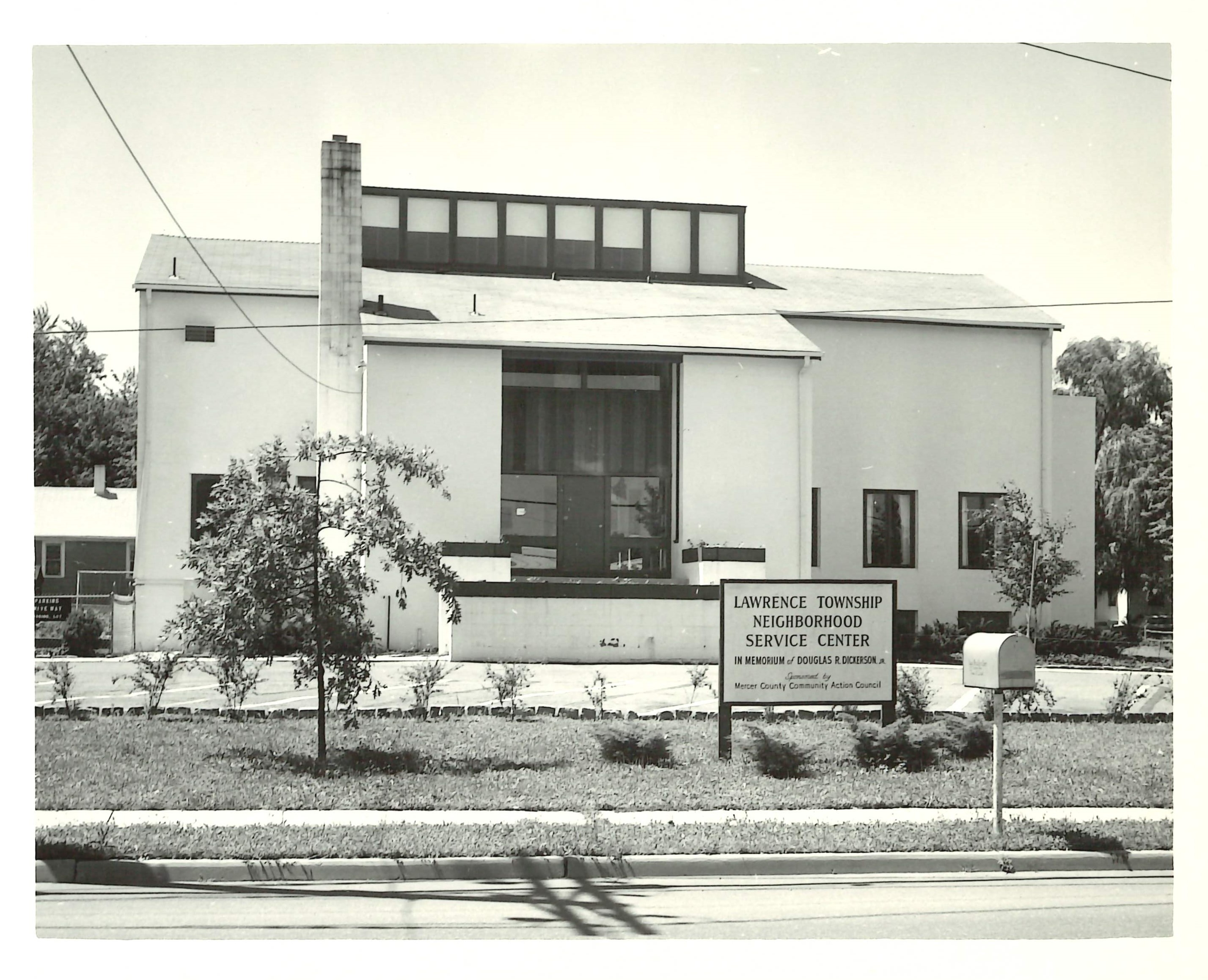
As I say, after two years, we outgrew that little building. Then, we wrote an application. All this was with the help of the Mercer County Community Action Program. Lawrence, we were the first of the municipalities to [do this], we had the first Head Start program, which was held in one of the local schools, and we had the first neighborhood center. We were ahead of all the other municipalities in the county. Then, we submitted an application to HUD for a larger facility and got funded for that.
 |
 |
Figure 4: The new Lawrence Township Neighborhood Service Center
[Editor's Note: Head Start is a federally-funded early childhood program operated by community and non-profit organizations that is offered to children of low-income families. It was established in 1965 by the Office of Economic Opportunity.]
SI: What year was that?
FV: Let's see, we opened the Center, the new center, in 1971.
SI: Okay.
FV: I was there for three years. Also, in the little center, that's where we started the housing program and we had a committee on that. The Housing Committee used to meet on Sunday mornings at seven-thirty, so that people could have the opportunity to go to church.
We had very good people on that committee. One was Thomas Mott, who was a councilperson, and a person from the Lion's Club, the Kiwanis Club, the two Presbyterian churches, the Civic League and the Baptist Church. We met and, again, we were meeting the needs of the community. First, we did a survey.
[TAPE PAUSED]
SI: You did a survey.
 FV: Yes, we did a survey. Irv Seidman, a member of the Committee, he and his wife were professionals at doing that. We called it "Project Pride."
The outreach person took the survey around and, actually, filled it out for a lot of people, the people who were living in substandard housing, people who were renting housing; people who were living in substandard housing and who were renting housing, because, when we were in the little center, part of our job was assisting people who were living in substandard housing.
There were families who were always [in need]. I'd get calls that they needed help. The toilets were either overflowing or they couldn't afford a plumber. I mean, it was just a bad situation all the way around.
So, we formed a non-profit corporation. With this survey--well, even before that, the health officer was also on our committee, the township health officer. One of the members asked him, "Why don't you make people bring their houses up to a better standard of living, or why don't you move them out, make them move out?"
He said, "Well, they can't afford to bring their houses up and we can't make them move, because there's no place for them to go. There's no place we can put them." He said, "If we put them out on the street, out of their houses," he said, "then, actually, we're also responsible for them."
So, we got the surveys back and we got a hundred of them, a hundred or more. It told us what people [wanted], where they're living, somewhat of their incomes and what they would like to live in. We gave them choices on the survey.
Figure 5: Sample Project Pride Survey Form
So, we used that to go to the Town and said, "We want to build some rental housing," and we searched around for sites. The present site, which was available, was the one where we built the housing. I knew the family that owned that property, and so, I went to them. I knew where they lived. I went to them and asked if they would be willing to sell or give us an option on their land. They said, "Yes, yes."
So, I came back to the Committee, at our next meeting, and told them that they're willing to take an option on the land. So, also, on our committee was a councilperson, who was on the Township Council. Evidently, he spread the word to some contractors of what we wanted to do.
So, the Committee gave me the authority to go back to the people who owned the land and say, "Okay, we want to purchase it. How much do we need to put down for it? What's the price of it and what do we need to give you for an option?"
Well, she told me--oh, no, when I went back, which was the next month--she said, "Well, Mr. Vereen," she said, "we thought it was you who came back. We thought it was your organization." She said, "Somebody came and took an option out on the land." Well, I told her, I said, "No, it wasn't us," but, somehow, one of the contractors, a contractor, had gotten word [of] what we're going to do. They went and got an option on the land.
Then, we got a call, they called me and said, "We'd like to meet with your group. We're the outfit that took an option on the land." I said, "Okay." So, they came to our next meeting. They said, "We'd like to make a deal with you, we'll build the housing there, and then, we'll turn it over to you, like a turnkey operation. We'll build it, and then, we'll turn the whole development over to you."
So, I told him, I said, "I'll tell you what." I said, "You build them and we'll see that nobody in this community moves into them." They said, "Why?" I said, "You're not going to build what we want." I said, "You'll build something that won't last," like the people who later told us it wouldn't last six months. I said, "No," I said, "we want to build what we want to build."
SI: Had that been happening in other places that you knew of, contractors trying to come in and grab land from other community organizations?
FV: No, we weren't familiar with anything.
SI: Okay, I was just curious.
FV: But, we know that contractors, yes, we did know of [them building places]. The contractor that we eventually hired had built a development up in Englewood. Yes, contractors were building places, but they were building it for the community.
The community wasn't involved like we were in construction and trying to put more of the human aspect into what you were doing. So, we told them, but we weren't aware of any of that at the time. We were mostly concerned with what we knew was needed. We knew how we wanted to make this, to build this, and add the human aspect of it.
So, they had an option for a year. So, we continued to [work]; we didn't let that stop [us]. We just went on, we continued our process of meetings of the Community, Zoning and Planning Boards. After a year, well, we hired an attorney, a local guy. Actually, he and I graduated from high school together and we didn't know one another at the time. He lived here in Lawrence. We hired [him].
I contacted the attorney. The Committee told me to contact an architect, who was local. We just continued our process like we had the land already. Then, after a year, the people who took the option on it, they didn't do anything. So, after a year, I went back to the family and we got an option on it. We had to put five thousand dollars on the option. We raised five thousand among ourselves to put the option on their land. Then, we started our process.
First, the architect did a design of the development. He did a design for two hundred units. We told any organization or any church that wanted to hear what we were doing and what we wanted to do to make contact with us. We would come to your organization or church and make a presentation. We went to eighteen organizations and churches.
READ: The Eggerts Crossing Tenth Anniversary pamphlet.
Some were good. Most were responsible and responded good. The worst church, the worst one, was the Catholic church, which is right in the community here. It's up on [Route] 206, but most of the people lived in Eldridge Park. They didn't live in Eggerts Crossing, but they lived in Eldridge Park, the next community adjacent to Eggerts Crossing. Their children would go to the same school.
[Editor's Note: Eldridge Park is a community, or neighborhood, within Lawrence Township.]
That was a large crowd that we made our presentation to. They were boisterous and they spoke their mind. There was one elderly guy who was at that meeting. About two years after (or three years after), we had built the development and had people living in it and it was ongoing. He belonged to the local Democratic Club that I belonged to, I used to attend. So, he came up to me, years after.
He said, "You know, Fred," he said, "when you made that presentation at the Catholic church," he said, "I was there." He said, "I worked for Public Service [a gas and electric utility] at the time." He said, "I traveled around the state." He said, "I would see developments like that being built," and he said, "A year or two after, I'd just see them start deteriorating."
He said, "There was nothing you guys could tell me at the time that [would have convinced me that] the same thing wouldn't happen to this one." He said, "But, I'll tell anybody," he said, "you guys made a believer of me," he said. No matter where he saw me, standing in a crowd of people, he'd say that same story.
The other organization that wasn't too cool was the Republican Club that Tom Mott [joined], who was a Republican and on Council at the time, who really supported the project. He also was a member of the Lawrenceville Presbyterian Church. His organization didn't support it. They later dropped Tom and he didn't run. They didn't let him run when his term came up. They didn't let him run as a Republican.
The other person who was on our committee that lost something was Michael Spicer. Mike was the Township Attorney and his firm represented (represented the Township) when we had to sue the Zoning Board. We had two lawsuits.
A community organization sued us. They said we're going to bring all "those people from Trenton" out here and they didn't want that. We sued the Zoning Board, because the Zoning Board let our application expire. So, we took them to court.
Mike came and represented Lawrence Township. We had our own attorney, but our attorney didn't have to say nothing, because you would have thought that Mike was our attorney. He, more or less, spoke on behalf of why we needed that. The Judge ruled in our favor. The Judge told the Township to issue us a building permit. So, Mike's firm, when their contract was up, their contract wasn't renewed by the Town.
[Editor's Note: Michael Spicer (1932-2019) was a lawyer and partner in the Jamieson Moore Peskin and Spicer Law Firm. For a period of time, he served as counsel to the Lawrenceville Planning Board.]
Another organization that we went to see, we went to speak to, was the Lions Club. Now, the Lions Club had done a lot of work--they didn't do a lot of work--but they bought the land for us, for the Community Action, that the neighborhood center was built on. They were a supporter of the housing.
The member who was also on our Housing Committee was Bill McGrath. Now, Bill owned the local pharmacy, McGrath's Pharmacy. When we started having public meetings on the housing, the crowds got so large that we had to have them in the auditorium of the junior high school. The community was really upset that we were bringing this subsidized housing in, the outer community. The Lions Club was all for the housing, until the community started objecting to it. Then, they backed out.
Bill came to me one day and Bill was upset. He came to me one day with his tape recorder. He taped one of their meetings, one of the later meetings when they were objecting to it. It was terrible. Those guys were saying all kinds of things about "those people from Trenton" and what this development was going to do to this community.
Bill told me later--Bill later sold his business--he said, "Fred, I can't stay here." He said, "I thought these guys were my friends." He said, "I didn't think they had this kind of feeling against people." He said, "I can't stay here." So, he sold his business and moved to Georgia. The people who are on this Housing Committee, that's how dedicated they were in improving the lives of people.
[Editor's Note: The McGrath Pharmacy was established in 1957 in Lawrenceville, New Jersey. In 1972, Bill McGrath sold the pharmacy to the current owner.]
Those eighteen organizations, what we did was really beneficial to us, because we went to the League of Women Voters and they supported us. It made it easier for us when we had the large public meetings, by cultivating these other groups, by going around and getting people in our favor.
Well, when we hired the professionals, when we hired the attorney and the architect, we told them, at the beginning, that, "We have no money and the only way you'll be paid is if we get funded for the project," said, "If we don't get funded for the project, you don't get any money." They understood that and they were committed just as much as we are.
[In] submitting, the other good thing we had on our committee was two community people, a person by the name of Bob (Grower?), who worked for the New Jersey Housing Mortgage Finance Agency--that's where we were going to submit our application for funding for the housing--and Joe Feinberg, who lived in the community and worked at the Department for Community Affairs (DCA). Those two really helped us in putting in the application and going through the whole process--and making the right contacts with the right people at these agencies.
[Editor's Note: The New Jersey Housing and Mortgage Finance Agency (NJHMFA) is a state agency that helps those in need gain access to affordable housing through a number of programs, provides mortgage funds for construction, also assists in getting rent subsidies for tenants from HUD. The New Jersey Department of Community Affairs (DCA) is a state agency that provides a wide array of services and oversight to the communities of New Jersey from code and standards to disaster recovery and mitigation.]
Before we could put an application into HMFA, we had to own the land. The people wanted ninety-six thousand dollars. Our attorney, he knew a local bank in Trenton, the Broad Street National Bank, which is no longer in existence. He knew the president and they would give us the ninety-six thousand dollars.
We had to have eight people sign a promissory note for twelve thousand dollars--or, no, it was twelve people to sign a promissory note for eight thousand dollars. So, we got twelve of our people, including myself, one of my older brothers, and half a dozen local community people, and then, outer people who were on the Committee from other organizations. We signed a promissory note for eight thousand dollars.
The bank gave us the money and we purchased the land. Then, we submitted the application to HMFA. First, the Town approved a hundred units instead of two hundred. Actually, I'm so glad they did, yes.
SI: Yes.
FV: Two hundred would have not been manageable, especially for a person like me, who never had any experience in managing housing, but a hundred was good.
We had a person, Peggy Huchet, who first came on board as a secretary of our Housing Committee in '67, when we started, who later became President, and then, who later wrote a tenant education program that we submitted to the Department of Community Affairs and got funded for. That program took place right in the development, in the community building.
Every tenant that moved into the development, initially, had to go through this tenant education program. It was a well-written program and we got funded through DCA for, I think, four or five years for that program. What it did, we had agencies come in, like we had the local fire company come in and present a program on the whole aspect of how to care for your apartment to prevent fire. We were one of the first developments in HMFA, their developments, to have smoke alarms installed in all the apartments.
The other thing we did when we were building the apartments were, at the time, when developments like this were built in HMFA, they had master meters, where tenants didn't have to pay their utilities. We said we didn't want that. Each one of the developments has their own separate meter, where they all had air conditioning and heating units in.
We said, "We want people to start paying their own utilities, so that this is only a stepping stone, that they can go into home ownership. They already will be able to assume their own utilities. We want them to be responsible for all these things right in that unit, so that if they go to the next step in owning their own home, they're already used to paying their utilities."
We have, at the very beginning, before houses--like now, it's harder for people to move--there's some people that have been there twenty-five, thirty years--they can't afford to buy a house. There's nothing here in Lawrence. The houses, we've had people that move into other developments, even here in Lawrence, and they want to come back, because [of] the size of the bedrooms and the closet space that we have in that. They're for family units and they're large.
We have four- or five-bedrooms and those five-bedrooms are larger than most houses. They have two full baths upstairs and one full-time bath downstairs. In the four-bedrooms--there was fourteen four-bedrooms--in those bedrooms, those fourteen four-bedrooms have two full-time baths. They have one downstairs and one upstairs.
As you see, the grounds are immaculate. When I took over, I told the maintenance men, "Anytime you see a piece of paper on the ground, I want you to pick it up." I said, "Because when kids and family people see you picking up stuff, they will do the same." We established litter baskets throughout--we put them on the light poles--where people could put their trash in.
In public meetings, when we had public meetings, they said it wouldn't last six months. There were people saying it wouldn't last six months. Here, this year, we're celebrating our fiftieth anniversary.
SI: Wow.
FV: And so, it was a struggle at first. When I knew I wanted to be the manager there, I told my wife at the beginning, I said--when we were searching, the Housing Board started searching for housing managers--I told my wife, I said, "I think I want to manage that," I said, "because all the hullabaloo we went through, one way to make sure that it's run the right way and that it's everlasting is that I'd be a part of that management."

Figure 6: Mr. Vereen beside the Eggerts Crossing Village development sign.
So, I started taking courses and things, at the very beginning, in management and administration. Then, my wife, who was a registered nurse, she stopped nursing and she became my site manager. We worked together there as a team and in hiring the staff, who took on the same philosophy that we did in making it work. The end result is what you see today.
SI: You said you faced these dissenters who were worried that you were going to bring in--it sounds pretty openly racist--"people from Trenton."
FV: Yes.
SI: Did it ever get violent? Did you ever face any threats or anything like that?
FV: No, no.
SI: Okay.
FV: But, it got [heated] at some of the public meetings. Like you said, the racist aspect of it, oh, they said in public meetings, "We don't want those black people from Trenton coming out here." No, they didn't pull any punches back then.
The Board of Education, we made a presentation to the Board of Education and they were really concerned, because, at the present time, all the Black kids from this area went to Eldridge Park School. Eldridge Park, at the time, it was, I don't know, about thirty, thirty-five percent were Black kids, where all the other elementary schools in Lawrence Township had maybe one percent, two percent, three percent Black.
So, they knew that they had to do something. They were really concerned that it was going to overload Eldridge Park School. So, they later came up with a desegregation plan that started busing kids to different schools. No, it was a hot time here in Lawrence during this.
SI: Yes, I would imagine the busing drew a lot of criticism as well.
FV: Yes, oh, yes, it did--not on our part, but on [the part of] people from other parts of the town having their kids bused into Eldridge Park, yes.
SI: When you took over the management of Eggerts Crossing, did that mean you stopped working at the Center?
FV: Yes, yes.
SI: Okay.
FV: The same year--we opened in '74, we opened the Village--I gave up the directorship of the Neighborhood Center.
SI: You talked about the credit union and the housing programs. If I was a citizen in the area, what else could I get out of the Center? What else could the Center do?
FV: Well, we formed another non-profit group, Lawrence Daycare Center. We had a daycare center for working mothers at the Center. We had a youth counselor that developed programs for the youth. We had organizations that really came in to meet with people at the Center, [such as] the food stamp program. We had meeting places that people could meet (local and township people could meet) at the Center, but it was a busy place.
SI: Did you remain involved with the Center in any way after that?
FV: Yes, I never [stopped, but] not as actively as I was at the beginning, because I had my hands full at the Village.
SI: Sure.
FV: Then, five years later is when I took over Architects Housing.
[Editor's Note: Architects Housing is an eight-story affordable housing apartment complex in Trenton, New Jersey.]
|
|
|
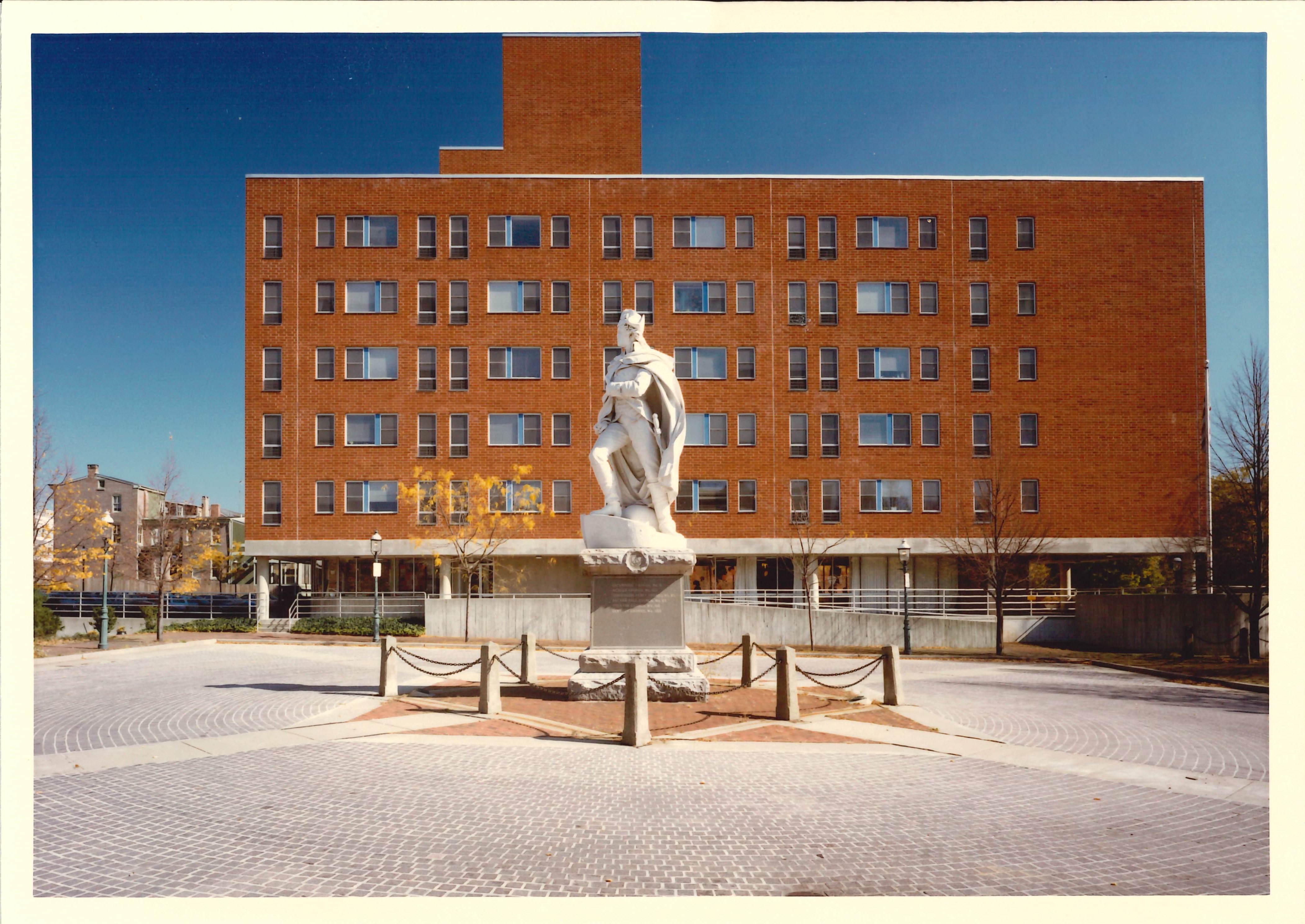 Figure 7: "Architects Housing Company II managed from 1979-2016."
 Figure 8: Joe Wirth, President, Architects Housing Company & Fred Vereen, Jr., Manager (1980)
SI: Okay.
FV: That's another story.
SI: Yes. Do you want to go into that now or do you want to take a break?
FV: Well, I can. The five years, the same architect that did the Village, he also was on a board of architects in the Board of State Architects. The architect that was the architect (Elizabeth Moynahan) for the Neighborhood Center was also a local person and I knew her well. We became friends because we got her to be the architect for the Neighborhood Center.
John, who was really a community person, John Svosec, the architect, he got his architects to agree to form a non-profit and build housing for seniors. So, he did that. They were the first architects in the country to build senior citizen housing.
They had a competition between the architects to design such a building. The architect who they got was a local Princeton architect--oh, I forget his name at the time. He was also a professor there. He taught architecture at the Princeton University--Bob Geddes is his name.
[Editor's Note: Robert Geddes (1923-2023) was an architect and Dean of Princeton University's School of Architecture from 1965 to 1982.]
SI: Okay. Bob Geddes got involved.
FV: Yes, Bob Geddes was the architect. I have a paper that was written by someone on that, if you'd like to see it.
SI: Sure. Is it in the papers you sent me?
FV: No.
SI: No, I do not think so.
FV: No. I'll make a copy and give it to you the next time you come.
SI: Great.
FV: Well, Bob did a design and, I mean, a really nice building. I told John and Liz Moynahan, who was the other architect--they were on this board--I said, "I'd like to manage that." They said, "Okay." So, they put my name in.
There was another firm, a Trenton firm, who had a lot of pull at HMFA and had a lot more experience than I had in housing management. He wanted it, also. They eventually [decided on me] because of John, and there was another architect, Joe Wirth (President of the Board, Architects Housing), who also graduated with me in high school at Trenton High, that we didn't know each other at the time. He was in my corner. So, they ended up giving it to me.
I came onboard while it was still under construction. An eight-story building, there was 122 units, all one-bedroom. I'd go down there while it was under construction. I'd look up at this building and I said, "Lord, what have you gotten me into now?" [laughter]
I knew nothing about elevators, nothing about managing a senior building. So, I proceeded with [further studies], read up. My wife, Margaret C. Vereen, my daughter, Susan C. Vereen, and my two sisters-in-law, Esther Case and Kathry Allen, all my managing housing developments, they always followed me and helped me with the rent-up process and initial opening of the project.
Now, right in the area of Trenton where this housing was being built, in the back, the community in back of it, which is called Mill Hill, it's an older, residential area with historic houses and all white people. The person who was heading this group back there was a racist person. He owned a house back there, but he lived in a suburban community, Hopewell, New Jersey. He didn't live in Trenton, but he also rented housing on Perry Street, which is the poorer section. He had houses there that he rented.
He got this group to say (to work against me) that I shouldn't be the manager there because I was going to bring Black people in there. So, I was having sort of the same problem in Trenton that I had here in Lawrence, that I was going to bring poor Black people there. They wanted it to be a place for professional retirees, like doctors and lawyers--but it couldn't be that, because it was a subsidized [place]. It was for lower-income senior citizens.
SI: Yes.
FV: At the time, I did not have a real estate license. You can manage one development without having a real estate license, but, once you start managing two or more, then, you had to have a real estate license; either you had to be a broker or you worked under a broker. So, I didn't have my license, and so, they thought that they were going to use that to get me out.
Now, the same councilperson who was here in Lawrence who was sort of against the housing--he really wasn't, but he was hardnosed--he worked for the New Jersey State Licenses and Insurance, had something to do with an insurance agency. That was in a building right up from where my housing (where Architects) was in Trenton. Later, he and I became good friends.
So, I was having a problem getting my real estate license. I had started taking courses to get them and I did not have them yet. So, he told me, he said, "Fred," and it became [a whole issue]. I have newspaper articles and clippings and things of what I went through with this group.
READ: A Trenton Times (November 29, 1979) article on the licensure issue.
So, he said, "I'll get you a meeting with the person who's head of the insurance, state insurance program, and the real estate license comes under her." So, I met with her. I told her that I was working to get my real estate license and all that.
So, she sent me a letter that I could show to this organization and NJHMFA, that I was working to get my license. As long as I'm proceeding to do that, until I get my license, it's acceptable for me to manage Architects Housing. I went on and, finally, I got my license and went on. Five years later, I got another development then. That's another story.
SI: Yes.
FV: Getting back to [Architects], before we opened up--it shows you how, if you step out in faith, the good Lord will help you--somehow, I got word of a person who had just moved into Trenton who was looking for a job as a maintenance man or something. I don't know how I got word of this person, but I got his address and I went to his house. He had just moved from New York with his family.
He had experience in high-rise apartments and elevators. I asked him if he wanted a job and he said, "Yes." He was a Spanish person. He came in--he knew elevators, he set up the shop the way it should be. He moved his family in and his daughter became my secretary. She was good. She did a newsletter and did social stuff. They just fell right into place.
We got all kinds of awards. I mean, the development itself got awards for design, but, later, in this paper that I'll give you, they said, even with the way that the development was designed and all the aesthetics and the amenities that it had, that if it wasn't for me being there, none of that [mattered]. The development might not have been even a success, as good a success as it was.
SI: Yes.
FV: So, even with all the hardships with that development, it was good.
SI: You mentioned that there was this argument over who would occupy the building. In the end, did it turn out to be who you wanted to invite into the building?
FV: Yes, and they said it was going to be all-black, again. We had (my statistics) after a couple years--well, even in the process--we had about forty percent black and maybe twenty-five percent white and the rest was Hispanic. We had a good mixture of people, nothing like what they said it was going to turn out to be.
SI: I feel like there is a lot more to talk about and I do not want to force you to go through it all right now. I do have a couple more questions, then, maybe I can come back another time.
FV: Okay, yes.
SI: Great. You mentioned (going back all the way to the beginning) your work with the Civic League as--I guess President was the office?
FV: Yes, yes.
SI: Can you tell me about how you got involved there and the different things you did there?
FV: Yes, well, the Civic League, I started with the Civic League when I was eighteen. They formed a social group in 1949. It was mostly a social group of older people who would get together. They would have dinners. I didn't know anything that they had done.
I joined when I was eighteen and they all were in their fifties, sixties. I mean, anybody fifty years old at that time, when you're young, it was old, but they were in their fifties, sixties, I guess. Some of them were a little older.
I joined. One reason I joined was because they had meetings in everybody's house and different, varied [foods]. Every month, it was at a different house. The ladies always had good food and I was young. [laughter]
SI: Okay. [laughter]
EV: Food was enticing to me. Then, I became President. Did I give you a picture? There's a picture of me and two men.
SI: I do not think so.
EV: One of our first projects was--it's a newspaper clipping.
SI: I will look for it.
FV: Yes. I was looking at it last night. Our first major project was--no, I don't think I gave it to you.
SI: Yes.
FV: Our first major project was when the Township wanted to put light industry in back of us.
SI: Yes.
FV: I got the Civic League to [respond]. We told the Town that we didn't want that. Did I go through that with you?
SI: You mentioned it on the tour. You pointed out where they wanted to put the light industry.
FV: Yes. In the 1965 master plan, the Town wanted to put [in] light industry. That's right across the street from the Neighborhood Center. All that was vacant land. It was acres and acres of vacant land. It goes all the way back to the wooded area. A Township police officer, at the time, owned land in that area, also.
At the time, the railroad tracks were still in existence. The train, at the time, used to bring coal to Lawrenceville, for the school. Lawrenceville Fuel--most houses in Lawrence didn't have oil at the time, they used coal--they used to bring railroad cars of coal and feed up, also, there was a feed mill. Lawrence, at the time, had many farms, cattle farms. There was a feed mill in Lawrenceville, where they used to bring boxcars of feed. So, the tracks were still in existence.
In the '65 master plan, the Town had light industry for that area. We told them, "No." We said, "If you bring light industry in our community," I said, "we'll never develop our community the way we wanted it to be." They wouldn't take it out.
At the time, the Democrats had control of Town Council. There was three Democrats and two Republicans and we always voted Democratic. We told the Democrats, we said, "If you don't take it out, we will vote Republican this year." They said, "Oh, Fred, it's only a plan. You know that it'll never happen in our lifetime." I said, "No." I said, "When you guys plan something, especially for the black community, it's a plan that's going to happen."
Then, at every election, at the Crossing Inn--the nightclub was in existence at the time--every night before election, the Democrats would have a big party here at the Crossing Inn. They'd have hot dogs and beer and soda, chips and pretzels and stuff. All the politicians, from the Governor on down, would come. Whoever was running for office would come to this big party at the Crossing Inn, because we always had a big block of votes in this area.
[Editor's Note: The Crossing Inn was a restaurant and bar in Lawrence, New Jersey, that hosted famous musicians.]
READ: Mr. Vereen's account of the history of the Crossing Inn.
So, when the President of the Democratic Club came to me that year and they wanted to have the party--I had already talked to the owners of the Crossing Inn, who I know, who I knew as I grew up here with them as a kid. I told them what we wanted to do and what we didn't want to do, and they said, "Okay." So, when they came to me and said, "We want to plan for our party," I said, "We're not having it this year."
They said, "Why?" I said, "Well, we told you at the beginning, the Democrats, that if you don't take that light industry out of the master plan, we're not going to vote. We're going to work against you." Of course, naturally, they were upset. We did just that. We voted. It's the first time that they had all Republicans on Town Council. We voted the three Democrats out. Well, we voted for the three Republicans that made it a full Republican council that year, that took office.
People said, "Well, what happened to your plan?" I said, "Well, you look at it--you don't see light industry back there, do you?" because that plan, had it went through, we never would have developed Eggerts Crossing Community as you see it today. The kind of industry that would've been back there would not have been the kind of industry that would want anybody to build a new home here in this area.
SI: You mentioned on our tour that the railroad tracks cut this area off from the rest of town.
FV: Yes.
SI: It was like a depression--I mean it was physically lower than the rest of the grade.
FV: Right.
SI: Now, it is a nice walkway on the same level as the rest of the area.
FV: Right.
SI: Did that happen back then or did that happen later?
FV: No, that happened later.
SI: Okay.
FV: What happened, in '75, the next year after we moved into the Village, we had a tremendous storm, rainstorm. There was no drainage system in this area and in the area above the next road over, Drift Avenue. There's Johnson Avenue, then, there's Drift Avenue. All in that area, whenever it rained, all the water would funnel right down into the Village.
That rain, we had a flood in the Village, where the building closest to the drainage area, there was six feet of water in one of the buildings, the building there. There was about an inch of water into the community building. So, we asked the town government to put in a drainage system and they said they would.
Now, we had twenty-six acres that we purchased at the site. Twelve acres, the buildings were put on. With the play area, we used thirteen acres. So, there was twelve acres that we weren't using.
So, the Town said, "If you would let us take that twelve acres, we can put another retention basin," we already had one retention basin, they said, "we can put in a larger retention basin in your area. We will put in the drainage system in Eggerts and, also, a drainage system over on Drift Avenue, where the water will come into this larger retention basin." There's a creek that flows right in back of us and all the water does eventually go into that creek.
They said, "The dirt that we get making that retention basin, we'll put in the railroad bed," and that's what they did. That's how they filled that, the gulley, where the walkway is now. They took the dirt from the retention basin and filled in the railroad bed.
SI: This is my last question, probably, for today. We got up to about 1984, when you were about to get involved with the St. James Project, but the Eggerts Crossing Project has been going on for about ten years at that point. Did you feel like, at that point, it was developing as you expected? Did you face any additional issues there?
FV: Oh, yes, we had problems at the very beginning. Naturally, we had people who had their children who came from Trenton. When gangs were coming into the city, I mean, yes, in the urban areas, they tried to bring it out here into our development. We had drugs, that families were trying to infiltrate into our system.
So, we were getting the same problems of the urban developments that we had to deal with. I had to work with tenants. It was a challenging time. It wasn't easy, it wasn't easy. It was a hard task to deal with some of the issues.
We had our first fire (or the only one when I was there), where we lost three apartments. Tenants, the people who had the fire, thought that we should automatically give them a place there, which, under procedures, we couldn't do that. They had to wait until we restored their apartment, but there was real challenging times.
We had to deal with the police department. The police department wasn't accustomed to dealing with a group of black people like that. When we first opened up, my wife and I would leave there at five or five-thirty. Half-hour later, you'd see two or three police cars going down toward the Village with their lights blaring, the sirens going. Five minutes later, they're coming right back. It might've been a minor domestic or something, nothing major, but they were afraid. They weren't accustomed.
SI: Yes.
FV: We had to start having meetings with the police chief and try to develop a better relationship with the police department and getting them accustomed. They started doing walkarounds, where they met kids and their parents and got to know them. We soon developed a good relationship with the police department.
SI: That cut down on the visits.
FV: It cut down on everything.
SI: Yes.
FV: We had meetings with tenants. There was a time when we were having break-ins during the day, when people went to work, and at night. So, we started having [meetings]. There's four clusters there and we would have a meeting with one cluster at a time.
We'd ask them, what did they think [could be] a solution to the problem? They suggested, naturally, security, "We want security." So, we said, "Okay, you want security? Who's going to pay for it?"
So, I said, "I'll tell you what you do." We had a group to go out. I said, "You go out and you get [the] price of security and bring it back to our next meeting." So, they brought prices back and how much security we would need. We came up with a figure. I said, "Well, you know who's going to pay for this?" I said, "You have to pay for it. It means an increase in your rent."
So, I said, "Let's try this." I said, "Let's develop a system in each cluster where we will have Family A, B and C (we'll take turns), say starting at four o'clock, looking out your windows." We'd do this. We set up a system, all through the night, starting maybe at four, where Family A would have somebody looking out their windows to check, see who's coming and going, writing out times and who you thought was coming, if you knew of somebody.
I said, "Look," I said, "you don't have to be looking out your windows twenty-four hours a day." I said, "All we have to do is let the community know." What we did, every time we had a meeting, we would send a flyer out to every resident, letting them know what happened at that meeting, what took place and when the next meeting was going to be.
I said, "As long as we notify everybody in this development that there's going to be people watching out their windows," and we specified a time, I said, "Whoever's going in the apartments, they don't know whether you're looking out the window or not."
We set up this procedure like that. We notified--we sent out flyers telling people what we're going to do and who was going to be watching. The break-ins stopped. After it stopped and we started having meetings, I said, "You see?" I said, "You can work things out without money." I said, "You just have to think about ways of doing things."
It worked, but there's always challenges. You have to take time to work out the best solution. That shows people that you can be effective and you don't have to pay for everything to get things done.
SI: Yes. I think I have kept you long enough. You have certainly given me some great answers today. I appreciate it.
FV: All right, well, I appreciate it.
SI: Thank you so much.
-------------------------------------------END OF TRANSCRIPT--------------------------------------------
Transcribed by Jesse Braddell 4/23/2024
Reviewed by Shaun Illingworth 9/3/2024
Reviewed by Fred Vereen, Jr. 10/8/2024