
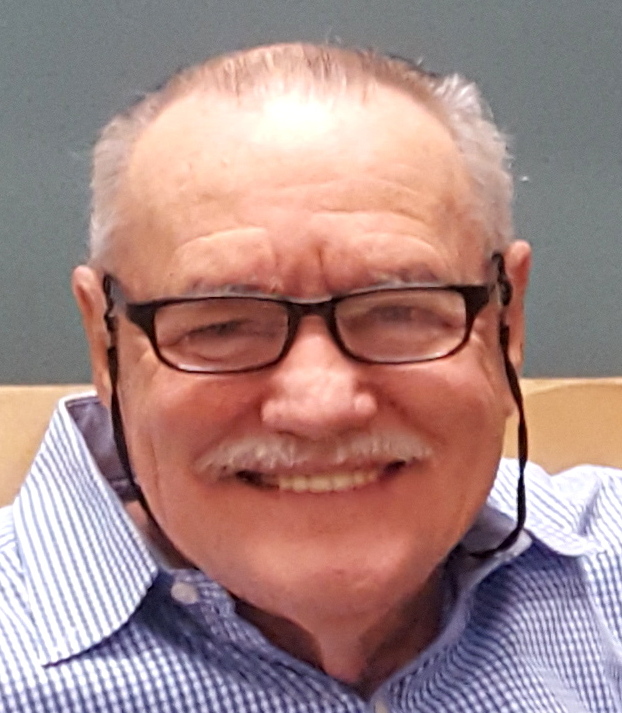

Kendra Boyd: And I am supposed to hit record? It says, “Please ask the host to give you permission to record.”
Jesse Bayker: Oh, hold on a second. Let me do that.
Charles Redner: I have got it or leave meeting?
JB: Okay.
CR: Should I say got it?
JB: Yes, yes. You should say yes. You want to record.
KB: Okay, and I will hit record to cloud, correct?
JB: Yes, as a backup.
KB: Okay. This begins an oral history interview with Mr. Charles Joseph Redner, on November 7, 2022, with Kendra Boyd, and I am also joined by ...
JB: Jesse Bayker.
KB: Thank you so much for joining us today, Mr. Redner.
CR: I am so honored to be here. Thank you for inviting me.
KB: To begin, can you tell us where and when you were born?
CR: I was born in Philadelphia, on April 3, 1939.
KB: Okay. What were your parents’ names, when were they born, and where were they born?
CR: Well, they were both born in Philadelphia? My mother was Dorothy Elizabeth Redner. She was born in Philadelphia in 1918, and she died in Seminole, Florida in 1989. My father was Charles Jackson Redner. He was born in 1915, and he died also in Florida in 1989.
KB: Okay. Can you tell us a little bit about your life before you got to Rutgers and any memories you have about growing up and sort of the trajectory that got you to Rutgers?
CR: [laughter] How far back do you want to go?
KB: Just anything you think is relevant for your development.
CR: Well, I had an unusual childhood, so I’ll mention it. I don’t really remember my mother and father until I was almost ten years old. My father went off to the war and didn’t come back until 1945. My mother must have worked, and I was raised by a woman from South Carolina. So, I have that little accent. If I meet southern people; I just sort of fall into it. She was like my mother and raised me. We lived mostly in Philadelphia, but then, every summer, we went to southern New Jersey, and it wasn’t rural--it was absolutely woods. We lived back in the woods. We had no running water. We had a pump outside, we had no electricity, we used those little kerosene lamps. It was just a great childhood, because I was allowed to roam in the woods. Nobody had any supervision over me, and I just went out there and went hunting looking for rabbits and turtles and whatever. Swimming, there was little lakes back there. So, that was my early childhood.
My father came back from the war, and we were in Jacksonville, Florida when he was released from the Navy. He came home with PTSD, post-traumatic stress disorder. It’s horrible because those World War II veterans didn’t get any service. No one even knew what was bothering them. I suffered from that because he suffered from it, in the middle of the night screaming and hollering and reliving those war battles. He was in the South Pacific for all those years. It was a horrible experience. If he was inebriated, he would start telling stories, and those stories affected me. He really saw a lot of action.
We ended up moving to New Jersey when I was ten, and I had all my school years in southern New Jersey, in Erial, New Jersey, which is a little tiny town. Went to middle school in Blackwood, New Jersey, and then, eventually, to Haddonfield for high school. Then, from high school, my parents decided to move back to Philadelphia, and I ended up just being a student at Northeast High School. It was a trade school, and I didn’t realize that. I wanted to go on to college, but I couldn’t get any college prep courses because they didn’t offer them. They didn’t even have a language course.
I lived through that and ended up--I was seventeen years old, and I started working for an advertising agency, and they put me through a broadcasting school. So, I learned to be a disc jockey, and read the news read. My first job back at the agency was producing a live TV show called Modern Living, which was a precursor the Today Show. I ended up working until, I guess, I was in my twenties. Then, I decided I wanted to get a college education, because I had a good job, but, boy, if you ever need to move up in the agency business, you needed to have a degree. I started at night at Rutgers in about 1965, maybe ‘66, and I spent seven years the hard way, at night, getting my degree. I’m very proud of that. I’m really proud of that, because I had a chance, as I said, to go out to Penn State on weekends and hang out with those kids and all, and I realized what a great difference that was. But I went through it, and I’m really proud. That brings you up to my freshman year at Rutgers.
JB: Mr. Redner, let me ask you, during your childhood, you were moving around from Philly to South Jersey and back to Philly. Can you tell us a little bit about the neighborhoods where you were living? What were their racial dynamics? Did you encounter African Americans in your neighborhood, in your schools? What were those relationships like during your childhood?
CR: Yes, the childhood days, it was Kensington, which was an almost all-white neighborhood when I was real young, and then I was ten when we moved to New Jersey, it was an all-white neighborhood, all those towns I mentioned, Erial, Blackwood, Haddonfield. When we moved back to Philadelphia my freshman year, sophomore year, Northeast High probably had more Blacks and Puerto Ricans than white. I was a minority at that time, and I never had any problems. As a matter of fact, the Blacks would go down into the basement and sing. Northeast High was like an old castle, and the guys that could sing--I mean, I used to sit down there on the tables and just listen to them. They did all the Detroit, Motown music, and they were just great. I never had any problems whatsoever. We were in, I guess, a mixed neighborhood while we lived in Kensington, but it was turning more Puerto Rican. As a matter of fact, I wrote a poem about that in which I said they changed the name of Northeast High School. They kept wanting to move it. This is the Philadelphia School Board. The Philadelphia School Board moved the name of Northeast High to a “better” neighborhood, if you will--you know, more white--and they left the school behind, and it was renamed Edison. Edison was turning completely Black and Puerto Rican. When I graduated, and they changed the name, I thought I had graduated from Northeast High, but the school board had changed the name. Here’s another thing, the Philadelphia School Board was so racist that time (mid 1950s). Herb Adderly was probably the second most famous athlete to come out of Philadelphia after Wilt Chamberlain, the great basketball player. The school board waited until Herb graduated high school before they changed the name, so they could take all the trophies and the awards that he had won for the school with them to the whiter neighborhood, a racist move by the Philadelphia School Board. This was in 1957. [Editor’s Note: Northeast High School, located at 8th Street and Lehigh Avenue, was originally known as Northeast Manual Training High School. In 1957, it was renamed Thomas Alva Edison High School. Northeast High School reopened at a new location in 1957. Herb Adderly, who graduated from Northeast High School in 1957, was a professional football player who played for the Green Bay Packers and Dallas Cowboys and was inducted into the Pro Football Hall of Fame in 1980.]
JB: During that time, before your time that you actually get to Rutgers, you are also witnessing, probably on the news, things about the Civil Rights Movement. I do not know if you were seeing Civil Rights Movement activity in Philadelphia or in South Jersey where you were living.
CR: Oh, absolutely.
JB: What were you seeing in the world, and was it something that you saw in your own community or just kind of on TV talking about the South?
CR: Oh, no, I was well aware of everything that was going on. One of my biggest regrets in life is I did not become a Freedom Rider. I had just gotten married, and we had our first kid. I just couldn’t do it, but I was involved. I was very much involved. We were very much aware. At that time, I had moved to Cherry Hill, New Jersey. You’re probably familiar with that neighborhood. It was all white and mostly is still to this day. There were no real activities that I was involved in other than I got very involved in politics starting in 1968, the worst possible year in my life, 1968, because of the things that happened.
I started going to Camden, and I got involved with the Robert Kennedy campaign. One of my clients was the Camden County Economic Development Committee. They were responsible for bringing business into Camden, and Tom Kelly, executive director, was very much pro-Robert Kennedy. He didn’t care for Hubert Humphrey, who was going to be New Jersey Democrats choice for president that year. We brought Bobby Kennedy to Camden; I think it was April 4, 1968. He had just announced, and we brought him into Camden for a speech. Then, of course, by June, we had lost Bobby to an assassin. We lost our candidate, so we changed the name of our organization to New Jersey Citizens for McGovern. So, I was active in trying--it was more of an anti-war movement than an anti-racism movement. We were just very much anti-war. As a matter of fact, I resigned my commission in the New Jersey National Guard, so that I didn’t have a conflict. I was all in, to stopping the war in Vietnam. George McGovern announced that he was running--most people forget this -- in 1968, and we brought him in to Cherry Hill, New Jersey, where he gave a memorial speech for Bobby, the most moving thing that I can recall doing. Then, I worked with George up until the end of the ‘72 campaign, when Nixon beat him out. [Editor’s Note: Beginning in May 1961, African American and white “Freedom Riders” began testing the desegregation of interstate bus travel made legal in the 1960 Supreme Court decisions Boynton v. Virginia and Morgan v. Virginia. They faced violence, arrests and imprisonment, when hostile southern mobs and local law enforcement refused to honor the rulings. Senator Robert F. Kennedy spoke in Camden at Convention Hall on April 1, 1968. On April 4, 1968, the day that Dr. Martin Luther King, Jr. was assassinated, Robert Kennedy was campaigning in Indiana. That night, Kennedy gave a speech in Indianapolis. After winning the California primary, Kennedy was shot at the Ambassador Hotel in Los Angeles on June 5, 1968 and died the next day. George McGovern, who served as a U.S. Senator from 1962 to 1980, announced his candidacy for the Democratic nomination for the presidency on August 10, 1968. McGovern had previously supported Kennedy’s bid for the nomination and was reluctant to enter the race, even after Kennedy was assassinated. McGovern went on to become the Democratic presidential nominee in 1972 and lost to President Richard Nixon.]
That’s my story about that, but there wasn’t a lot of racial activity. I don’t even recall, while I’m at Rutgers, because going at night, if they had closed down the library during the day, it didn’t affect me at all because I probably didn’t even hit the library. I mean, I’m working all day, it’s seven o’clock, I’m in class, and at ten-thirty, I’m leaving, and there was no hanging around the campus. As a matter of fact, I don’t know if it’s still standing, but we were in a four-story RCA Victor building for all of our classes. Then, also, on weekends, and even at night, we’d go into Camden--there was a Catholic priest who was very organized in Camden. We used to go out into the neighborhood to try to improve the rental facilities, ninety-nine percent Black. We went around for a whole summer, and the only thing we got fixed was a was a fire escape that potentially needed to be repaired. Other than that, we did nothing. So, I wrote an essay in sociology about how tough it was to change attitudes and get things done. My professor kind of asked for a meeting with me and wanted to know if he thought I could change social behavior, and I said, “Yes, of course I do,” and he laughed at me. I’ll never forget that laugh. I left realizing it’s going to be a long, long haul before we ever get any equality.
KB: Mr. Redner, just for the record, can you tell us the years that you attended University College at Rutgers?
CR: It was ‘65 or ‘66, and I was class president in ‘72 when I graduated. So, it was a seven-year span.
KB: You mentioned before that you were working full time. This is why you attended night classes, but can you tell us a little bit more about why you selected Rutgers-Camden as opposed to any other school for your education?
CR: Well, I was working in Philadelphia, so it was probably location more than anything else. I attended Temple for a semester when I thought I wanted to be a CPA [certified public accountant]. It only took a semester to get that out of my head. [laughter] Other than what else was around, just having the availability of Rutgers being in Camden was terrific, a major university like that. So, it was easy to go. I had to go through all the various majors I thought I wanted to do, and I ended up with psychology. I loved it, and I loved the professors. I liked that it was--for me, coming from business and working in business all day long, there was no foolishness, it was serious business. Everybody that was in night school was there to learn and to get a degree, and I liked that about the night school. I’m very proud, in fact, that I had had an opportunity to go to Rutgers, my goodness. I didn’t want to go--in Philadelphia, I guess we had all of them there. I could have gone to any school there. Drexel was nearby, Penn was nearby, and I did go to Temple for a while. Living in New Jersey, after finishing work in Philadelphia, getting on that high-speed line, it was easy to get off in Camden, do my schoolwork and then, poof, head on home to Cherry Hill.
JB: Can you tell us a little bit more about your experience in college as a night student? What was your sense of what the classes were like or how the University College was connected with Rutgers-Camden? Regarding the day school, did you feel like there was a difference that people talked about, how the night school was perceived versus the day school?
CR: Well, it’s a total disconnect. As I said, you rush from work or dinner, get into class, and you finish, and you rush out. There’s nothing left. I didn’t get a college experience like I would have gotten if I had gone out to Penn State and stayed there for four years. So, it’s a totally different--you’re totally disconnected. There doesn’t seem to be--there was no loyalty to the basketball team, which was very good. We didn’t have a football team in Camden, I guess. Up in Newark, they did, or New Brunswick. You don’t get that school feeling, but I’m convinced that my education was as good as anybody that went to the day school because the professors were exceptional and they did their job.
I did volunteer to teach Spanish. Even though I didn’t speak the language, I did write a syllabus, and the professor let me teach Spanish first semester, and I really enjoyed that. I had a lot of Spanish-speaking friends. Most of my friends were Spanish speaking. They were from Mexico. They were from Spain. They were from all Central America and South America. My first class, I brought everybody into the faculty lounge, and I had wine and cheese and a flamenco party. Now, I owned the Spanish class and the professor, and I loved it. We didn’t have a language lab, so I had to bring in a tape recorder with dual tracks and I was able to record students listening to a Spanish speaker and repeating what they said. I kind of started a language lab and had a blast doing it. I got a “B” in the course, I know, and all my student fellow students wanted me to get an “A”, but Saint Theo, his name was Theo, Professor Theo, we loved him. He was terrific for letting me even attempt to speak Spanish and teach Spanish without knowing how to speak it myself. [laughter]
JB: You mentioned that you were not involved in a lot of things on campus, but then, in your senior year, you were the class president at University College. Can you talk a little bit about being the class president and what that meant for you?
CR: Yes, sure. In the class before me, 1971, was my best friend. William Crane was the president of the night school, and I just ran because he had run and won. I ran as president, and I was just fortunate to get the assignment. He handed me the gavel. So, I was really proud of that. I don’t have much recollection of my duties. I think the basic problem, or the basic issue, with the class at that time was to figure out the commencement exercise. That was basically the one issue you had to take care of. I’ll never forget the first meeting of the committee, the officers, and a few other people, probably a faculty representative and then the university representative. I said I wanted to have the president as our key speaker. Even though I disliked Nixon so much, I was going to forego that, and I said, “I’d like to have the president,” and the rest of the committee said, “No, no, no, no! We’ve had the president of the university so many times.” I said, “No, I’m talking about the president of the United States,” and they forgave me for that. We ended up with our state senator, I think, at the time--a U.S. senator, rather--Florio, and he was our keynote speaker. Outside of that, I don’t think we had any other assignment. The yearbook, we had people assigned to the yearbook. As a matter of fact, I think that all came out of Newark anyhow. We just sent the material in, and the book was produced. So, I don’t have much memory of doing much as president of the class, except the time that Rutgers decided it wanted to increase its minority student body. As president, I was given the assignment of helping to recruit Black and Puerto Rican minorities to Rutgers University. [Editor’s Note: New Jersey’s senators in 1972 were Clifford Case and Harrison “Pete” Williams. James Florio, who served as the governor of New Jersey from 1990 to 1994, held a seat in the New Jersey General Assembly between 1970 and 1975.]
KB: Can you, Mr. Redner, tell us just a little bit about when you first started attending University College, what the racial demographics were, and how you saw that change or not change over time.
CR: I think it was ninety-five percent white and just a few Blacks, and I don’t recall any Puerto Rican students in the student body. That didn’t change. I’m graduating in ‘72, so I guess that year was ‘71 I was probably working on recruiting minorities, and I don’t know the results of our efforts. I’m sure you have statistics, perhaps, that you can go back to in ‘73, ‘74 and ‘75 and see if that’s when it started to change the demographics of the student body.
KB: Do you remember why you were tasked with trying to recruit more minorities?
CR: [laughter] Yes, I say that in a poem. Why not give that job to a white guy to see if he can recruit some Black and Puerto Rican minorities to school? It’s just because as the president, I guess, that assignment was just handed over by the administration. They said, “Charlie, here, help recruit.” I had worked in advertising, public relations and marketing, so it was very easy for me to take on that assignment. I was very much aware of the BPUM, the Black People’s Unity Movement, in Camden, and I made contact with them. I do believe I went to their location--I don’t think we met at the university--in a storefront probably somewhere in Camden and discussed how they could help recruit Blacks and Puerto Ricans into the university and ended up writing and designing a little brochure, which I sent you a copy of, and printed it. I think the university probably paid for the printing because we wouldn’t volunteer to do that. I think the university paid for those and distributed it to the BPUM and around the community and tasked them with helping us recruit.
JB: Yes, we do have that image, and we will publish it together with the oral history. Do you want to tell us a little bit about how the artwork was created and the language of that?
CR: [laughter] Depends on your opinion of it, Jesse, [laughter] and you too. You know, that was the times. The artist was my closest friend who was also the Spanish speaker I brought into the university. I used to do--in addition to having that party, I used to bring in Spanish speakers, and we would do little table settings. We would have people sit down and have breakfast and have them converse in Spanish, and I would change out some of my Spanish speakers with students. He was a dear friend of mine, he was a graphic artist. I wrote it. I felt I was doing what it called for, and the language, and the style and everything, and then, the artwork and everything that we brought into it, it said to me, “This is 1960s artwork that is appropriate for the time.” I wrote it. Everybody approved it; it must have gone up the line somewhere in Rutgers to get approval to have the thing printed. That’s all me. [laughter]
JB: Can you tell us a little bit more about your interactions with BPUM as you are doing this recruitment and a little bit more about how you worked with them?
CR: I don’t recall as much; as I said, it’s a fifty-year-old memory. I just know that I was given the assignment. I was very much aware of the BPUM, and I did go and meet with them. I don’t remember exactly where, and there were probably a half a dozen people in the meeting. I explained to them what my job was, to help recruit Blacks and minorities into Rutgers this year, and we discussed how to approach that. The idea for the flyer may have come from someone in the meeting, but I don’t have a great deal of memory about what was going on, because there were two sides to the BPUM. Obviously, there was the hostile side, and then there was the guys that were trying to help me recruit. I was always treated well there. I mean, I don’t recall ever, ever having a problem in Camden at all in all my years there at night, walking around there, and being in the neighborhood where it was. That was way before the baseball field, way before the entertainment center there, and Campbell’s Soup and RCA Victor was just the big industrial complex there. [laughter] I don’t really have any better memory. There might be people still around from BPUM that might have that information, if they recall how they assisted in recruiting minorities that year.
KB: Mr. Redner, can you tell us the name of the graphic artist who worked on that fire?
CR: Robert Mansfield, M-A-N-S-F-I-E-L-D. He lived in Collingswood, and he married a girl from Cadiz, Spain, and that’s how I got--we had a party, I swear, every single week, and all these Spanish-speaking people are in there, and I picked up enough. I mean, I was good enough to get by, and I traveled to Spanish speaking--I’ve been to Spain and Mexico a lot, and I get by, but I shouldn’t have been teaching at Rutgers for semester. [laughter] Robert Mansfield, he was the graphic artist, and he’s still around. He’s still in Collingswood after all these years.
JB: You mentioned that in BPUM, you had the perception that there were some people who were maybe hostile to the idea of working with Rutgers and others who were supportive. What was the hostility? Do you remember?
CR: No. There was probably a storefront, and I can’t remember exactly. I don’t remember how many times I went over there, once, twice or three times. It wasn’t a great deal of interaction. I don’t think they ever came to a meeting at the university with anybody else. No, I’m probably more aware of the hostility of what was going on via the news reporting. The Camden Courier would have all the news in there, and as you know, the library was closed down at one time. I don’t know if outside activity was involved or just students, and they closed down, I think, the community room once in a while or something. There were fires in the cities and things. But, again, just coming in for those four, six hours at night and being closeted in a room with a professor and then leaving right after, I don’t have as much feeling for what was going on in the city at that time.
JB: One of the things that we know happened around that time in Camden, in 1971, was an urban uprising, or what some people call the Camden riots. Do you have any recollection of those events or people talking about it?
CR: Not really, other than it would be closed down. I think they might have even canceled some dates at the university if it was in and around the university. But I don’t even have a recollection of that being a major issue at all, you know, yes, and in Philadelphia. It was going on all around me, but I was isolated from it, as I said, working, going to the school and then immediately going home. It didn’t affect me personally, except emotionally thinking about what was going on in the country. That’s why I was working on the McGovern campaigns and Bobby Kennedy’s campaign, because I was so anti-war. I mean, I literally turned in my commission. I was a first lieutenant; I was next in line to be a company commander of an armored infantry unit, and I said, “This just isn’t right.” As a matter of fact, I’m interviewing a Vietnam vet on Wednesday who wrote a book about his time before, during and after, and it was really a cruel time. It was a vicious time to live through America in 1968. I say in my poem, when Northeast changed the name of the school to Edison, I point out that Martin Luther King was alive at that time, or they probably would have changed the name, but they chose Thomas Alva Edison as the new school name for Northeast High School, in the northeast region of Philadelphia, at that time. I hope you report all that because I’m still mad about 1957 in Philadelphia.
JB: You mentioned that you were very anti-war. I am wondering if you ever had any interactions with or were paying attention to what was going on with “The Camden 28,” these Catholic clergy and laymen who, in 1971, staged a protest in Camden against the war by burning draft cards and breaking into the recruitment office. Do you have any memory of that?
CR: I do have memory of it, but, again, I wasn’t involved in it. I didn’t come in to do that, and I don’t have a very good recollection of that, except, as a historical note, I’m very much aware of what was going on. I’ve read all the books about it and all. No, I don’t recall; I’m sorry.
KB: Mr. Redner, I wondered if you could share any other memories you have about the City of Camden and just what you remember while you were studying there about the city itself.
CR: No, I really don’t. As I said, I came in a couple of times. I didn’t even come in the--you know, we brought Bobby Kennedy to the convention center, and I wasn’t even able to make it in that night. I have a picture of me with McGovern when he came to Cherry Hill, and I spent a lot of time in the government. No, Camden city, I don’t remember much about what was going on there. Again, I’d go from Philadelphia, four to six hours in Camden at night, and then off the Cherry Hill, except that one summer, I did spend--and that was a calm summer, I guess, because I don’t remember anything happening when we went to inspect houses. That was a Catholic church; again, we were involved with some priests who were helping to alleviate some issues that could help with property management in Camden, to improve their living conditions. So, what we were doing was attacking I guess, the rules and regulations, I guess, regarding rental properties, and we were attacking them if they had violated any of those. We never accomplished anything; it was just an effort in futility, trying to make change. I’m sorry, I really don’t have as much memory of what was going on in Camden and coming in and participating in any of the activities there. But I was anti-war; I can tell you that. I am still. [laughter]
JB: We would like to talk a little bit about your time after Rutgers and see if you can reflect on how your experience at University College shaped your life after you left the university.
CR: Well, I was thirty-one, thirty-two when I graduated, so I had achieved--as a matter of fact, I was executive vice president of the largest billing advertising agency in Philadelphia. I chose a psychology major because I enjoyed that more than the business management or any of the other majors that were available. So, I didn’t go on; I really wish I had gone to school right out of high school, and I probably would’ve--if I found psychology--would’ve gone on and gotten advanced degrees and did something in that area. Since I didn’t, it didn’t improve my situation any which way, other than the fact that I did change advertising agencies a few times. I was very proud to have the Rutgers name beside my name as a graduate. How did it change in any other way? What makes a major change in your outlook on life? If you have a college degree that you can point to--I mean, so many people that I worked with didn’t have degrees, and the people in the arts--and what I loved about that was that you could be a woman, you could be Black, you could be white, you could be Asian, you could get a job, if you could write, if you could design, if you could produce TV. I just loved that atmosphere at my jobs and realized other people didn’t have it as good as I felt I had it working with everybody that was just based on their talent and abilities rather than anything else.
JB: Do you think that studying psychology helped you with marketing and advertising?
CR: I think so. [laughter] I ended up, a lot of times, saying that, but I also--my most famous quote about that is, “I may know enough to ask a decent question of a psychologist someday.” I like to think in advertising, obviously, you think psychology, you think of what’s going on and what would motivate people. Yes, so, maybe it did help me in that respect. But I loved psychology. I really wish I had gone on and had gotten advanced degrees and marched off into a career in that area.
KB: Well, we know, Mr. Redner, you are now living in California. Can you tell us a little bit about how you ended up in California?
CR: [laughter] I can tell you that. It’s a very easy story to tell. The year was 2000. I had my own company, and I was able to take the month of January off every year. I headed out west in a camper, ended up in Tucson, Arizona, in January of 2000, and my wife said she’d gone for a bike ride. [laughter] She came back with a realtor and said, “You’ve got to see this house.” I said, “No, I don’t want to see this.” “You got to see this house,” and, “I don’t want to see this house.” We drove over, we looked at this house. I walked in the front door and out the back door, and I just stayed there until finally the women were done looking around the rest of the house. My wife said, “What do you think?” I said, “How much of a deposit do they need?” So, we bought the house, I never came back to New Jersey, except to pack up and move, and I stayed there for ten years in Tucson, Arizona. But I bought a house up in Durango, CO, so that we could go back and forth with the temperature. The summers there were pretty hot. We travelled to Tucson in January, and it was beautiful, but finally, when July came, when we finally moved, I guess it was July even, and it was pretty hot. So, we bought a home up in Durango, and that was the greatest life I ever had, was going back and forth. I still had my own company. Between FedEx and the Internet, I was able to run my business from wherever I was, and that was a blessing. Then, I brought my in-laws out from Haddonfield to Tucson to live, and they weren’t able to handle the heat, even the couple of months that we were away in Durango. So, we moved everybody to California, so we didn’t leave them anymore, my mother-in-law and my father-in-law. We took care of them until they passed. So, that’s how I ended up here. I’m not happy here. I’d rather be in New Jersey. I’d really rather be back in Tucson and Durango, but I miss the East.
I mean, my Phillies--my God, we almost won the World Series. [laughter] I can’t believe it. That’s the one thing I learned about moving; it seems that the pro teams stay with you your whole life. [Editor’s Note: In the 2022 World Series, the Houston Astros defeated the Philadelphia Phillies in six games.] The college teams, boy, when I was in Tucson, Arizona was my team. I loved those guys. They were great in basketball and could beat anybody. Then, when I moved to California, still my Eagles are the team. I mean, I am such an avid Eagles fan, because I used to hang out with those guys. I was always up in the owners’ box, and I was in the TV stations boxes. Richie Ashburn was a baseball guy; he was a dear friend of mine. He would take me into the dugout. I mean, I just love those Philly teams, and they’ll always be a part of me.
That’s how I got here, and I don’t want to be here, but I’m here. It’s not bad. I’m seven miles from Laguna Beach. People from all over the world come to Laguna Beach, and I rarely ever even drive down there. I mean, it’s just right there.
I write most of the time. The first book I wrote was Down But Never Out. It’s about a Cherry Hill professional boxer, middleweight champ of the world, Joey Giardello, and it’s not a story about boxing. He had a son with Down syndrome, and he took him everywhere he went. He went to see the president, Frank Sinatra was a friend, Joe DiMaggio, all those famous baseball and football players. It’s funny, when you’re a boxer, all those other athletes gravitate to them. They’re like the last of the gladiators. That all ended in the ‘60s. He was a world champion in 1963 and inducted into the Hall of Fame. I wrote a book about his life. It’s an authorized biography.
Then, I wrote a book Terror Travels the Devil’s Highway while I was in Tucson about the terrorists coming across the border, because I was concerned about open borders at the time. I’m still concerned about open borders today. I wrote a book about how the bad guys from Afghanistan hooked up with the Mexican cartels and got into America and caused some havoc. 9/11, I was in Philadelphia on 9/11. I almost flew out that day. It was a tragic night, and it took me a week to get out of Philadelphia after that. I’m always concerned about what’s happening at the border because I know bad guys are coming across. Believe me, I’m for immigration, and I would help, I would go out into the desert, I would set water out there before I would do anything else to help migrants come across. But, believe me, I really fear that there’s some very, very bad guys--those guys over in Afghanistan, they haven’t forgotten. They’re still going to come after us. That’s my humble opinion.
KB: All right, Mr. Redner ...
CR: It has nothing to do with Camden. [laughter]
KB: Well, Mr. Redner, we are going to wrap up the interview, but I just wanted to see if you have any more reflections or anything else you wanted to share about your time in Camden or your efforts with Black recruitment at University College.
CR: Okay, I don’t have anything right now, but I bet when start reading--you know, as it comes back to me, if I see anything, I could make note at that time, right? You can include it.
KB: Yes, we can.
CR: Oh, good.
KB: All right, well, thank you so much for joining us. We really appreciate you participating in the interview.
CR: Oh, I thank you guys so much, really, and God bless you for what you’re doing. I hope it all works out for you, and I’m so happy you asked me to join you.
--------------------------------------------------END OF TRANSCRIPT----------------------------------------------
Transcribed by Otter AI
Reviewed by Zach Batista 5/30/2023
Reviewed by Kathryn Tracy Rizzi 6/9/2023
Reviewed by Charles Redner 2/21/2023